REVIEW · TULUM
Private Kiteboarding Lesson in Tulum
Book on Viator →Operated by Mexican Caribbean Kitesurf · Bookable on Viator
Learning kite control is all about the right coach. In Tulum, a private 3-hour lesson with IKO-certified instructors turns the beach’s wind variables into a clear plan. I love the land-to-water flow: you start with the wind window, the bar and safety systems, and self-rescue. I also love the coaching style, with instructors like Mauricio and Roma able to adapt when you want to focus on strapless or winging goals.
One thing to plan for: it’s subject to weather. If wind isn’t right, schedules can shift, and if conditions are poor enough the experience can be canceled with an alternative date or a full refund. If you have back problems or serious medical conditions, this one is not recommended.
In This Review
- Key things I’d watch for before booking
- Arriving at Ahau Tulum: where the lesson starts
- The beach part: wind window, kite setup, and bar safety
- In the water: body drag upwind, power strokes, and first waterstarts
- Riding work: downwind, upwind, and transitions that build real confidence
- Gear, comfort, and the paddleboarding bonus
- Price and value: what $270 buys you in Tulum
- Who this lesson suits best in Tulum
- Weather reality in Tulum and how it changes your day
- Should you book this private kiteboarding lesson in Tulum?
- FAQ
- How long is the private kiteboarding lesson in Tulum?
- Where does the lesson start and end?
- Is the lesson private or shared?
- What language is the lesson taught in?
- What’s included in the price?
- What’s not included?
- What are the age and fitness requirements?
- What happens if the weather isn’t good enough?
Key things I’d watch for before booking
- Private attention that actually changes what you practice, not just where you stand.
- Wind window theory on day one, so you understand kite positioning instead of copying moves.
- Safety systems and self-rescue early, which helps your confidence when you’re first getting in the water.
- A step-by-step progression on the water, from body drag upwind to waterstart solo.
- Instructors who adjust to your goals, including trick-focused work like strapless/winging and support for a true novice.
- Beach comfort plus extras, with bathrooms, showers, and Wi‑Fi, and paddleboarding boards included.
Arriving at Ahau Tulum: where the lesson starts
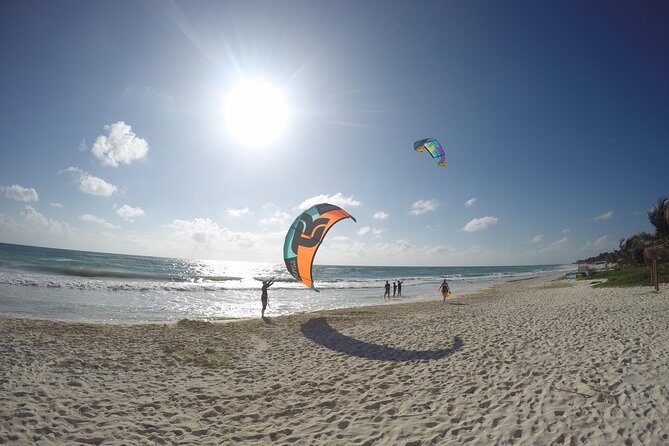
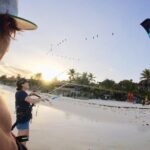
Your session starts back at Ahau Tulum (Carretera Tulum a Boca Paila Km. 7.5, Zona Costera, Tulum Beach). This matters more than it sounds: kite lessons go faster when you’re not wasting time with long transfers, and you can settle in right where the coaching begins.
Because it’s private, you’re not sharing your instructor time with strangers who move at a different pace. That’s a big deal in kiteboarding. Small differences—how you hold the bar, when you tension the lines, where you’re looking—are the difference between progress and frustration.
Also note the practical side: transportation and food/drinks are not included. So plan your day so you’re not hungry or scrambling right before you get in the water.
Other Tulum ruins tours we've reviewed in Tulum



The beach part: wind window, kite setup, and bar safety
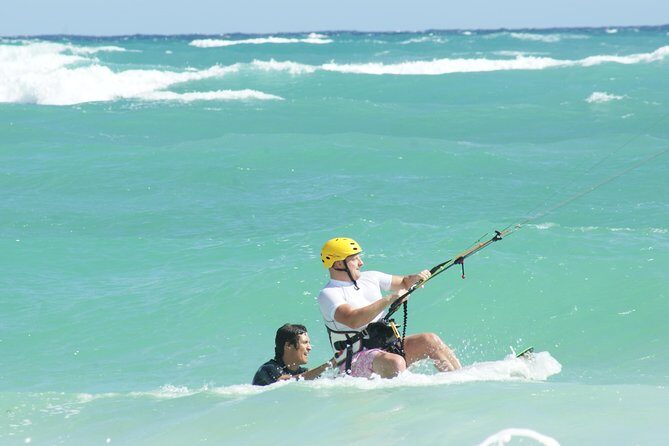
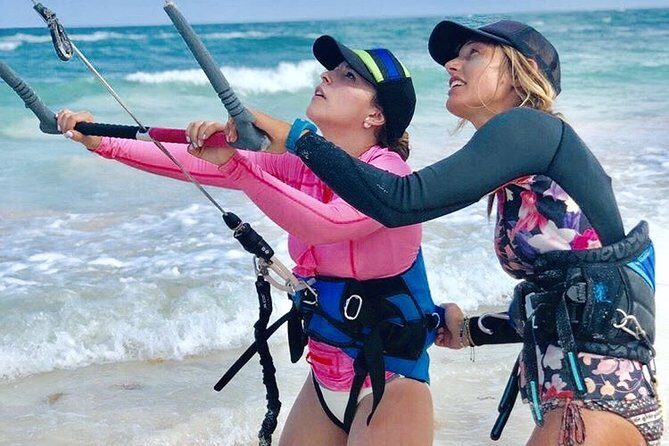
The lesson has a full sequence on the sand before you even get wet. Expect this to feel structured, not vague. That’s good, because kiteboarding is one sport where the theory directly affects what happens in the air and on the water.
Here’s what you’ll do at the beach:
- Kite & wind theory (including the wind window)
- Set up the kite & lines
- Bar internals and safety systems
- Self-rescue technique
- Kite control
Why I like this order: it reduces the chaos factor. When you understand the wind window, you stop guessing where the kite should be and you start positioning it on purpose. When you learn the safety systems and self-rescue on land, you build calm habits before you need them in real conditions.
You’ll also spend real time on kite setup. Many people struggle not because they cannot ride, but because they get flustered by gear. Having an IKO-certified instructor walk you through setup and control reduces that early friction.
And yes, safety is not treated like an afterthought. The bar has moving parts, and the line tension changes fast. Going over the bar and safety systems up front helps you understand what your hands are actually doing—so you’re not just reacting.
In the water: body drag upwind, power strokes, and first waterstarts
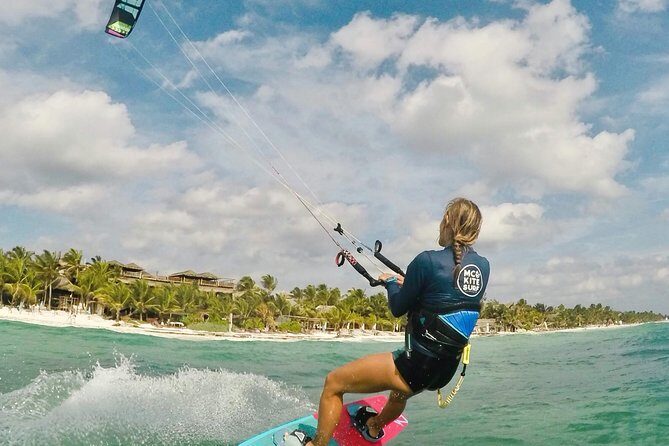
Once you’re in the water, the coaching shifts to technique. The goal here is not just getting you moving; it’s getting you moving in a way that lets you eventually ride with control.
The in-water progression typically goes like this:
- Body drag upwind
- Power strokes
- Waterstart with assistance
- Waterstart solo
- Ride downwind
- Ride upwind
- Transitions
First comes body drag upwind. This is one of the most important fundamentals because it teaches how to work the kite while you’re not yet riding. You’ll learn how to use kite power and body position together, so you can move against the wind direction.
Then you’ll practice power strokes. This is where many beginners start to feel the rhythm. You’re coordinating kite control with what your body is doing, and you begin to understand how power is created on purpose.
Next is the waterstart phase. You’ll start with a waterstart with assistance, which is exactly what you want early on. Getting help during the hardest moment of the start reduces panic and helps you lock in the right sequence.
After that, you’ll work toward waterstart solo. This is the moment where your learning clicks: you realize the start isn’t random. It’s repeatable, and the instructor can correct what you’re doing before it becomes a bad habit.
Riding work: downwind, upwind, and transitions that build real confidence
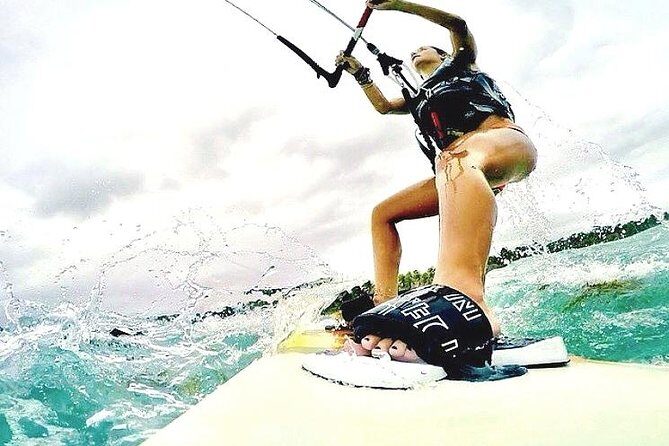
After your first successful starts, the lesson doesn’t stop at one good launch. It turns toward riding control—downwind first, then upwind, then transitions.
You’ll practice:
- Ride downwind (so you understand speed and steering while the kite is working)
- Ride upwind (so you learn how to stop drifting and start working against wind)
- Transitions (so you can change directions and keep the board under control)
This progression is smart. Downwind riding often feels easier at first, which gives you momentum and confidence. Then upwind riding forces you to use angles and kite positioning with intent. Once you can ride both directions, transitions make sense because you already know how the kite behaves when you’re moving.
The value of doing these in a private setting is simple: your instructor can watch your body position and kite angle the whole time. When something goes off, you don’t have to guess why. You get a direct fix and go again.
Gear, comfort, and the paddleboarding bonus
Your lesson includes kiteboarding gear, and there’s on-site use of bathrooms, showers, and Wi‑Fi. That may sound like a small thing, but it makes a difference in real life. Kiteboarding is physical and salty, and having basic comfort on hand helps you stay focused on practice instead of feeling wrecked.
You also get use of paddleboarding boards. It’s a nice extra if you want to balance the intensity. Even if you’re not riding long on a paddleboard, having the option adds variety to a single 3-hour block.
And because the experience is offered in English, you get clearer instructions without needing to translate in your head while you’re trying to manage wind and tension.
Other private tours in Tulum





Price and value: what $270 buys you in Tulum
At $270 per person for about 3 hours, this is not a budget hobby add-on. So the value has to come from the right place—and it does.
First, you’re getting private instruction. Kiteboarding progression can be slow when you share time. With one instructor focusing on your skills and mistakes, you can move from theory to setup to control without waiting for your turn.
Second, the lesson includes gear and a certified instructor. That lowers the hidden costs that can show up with rental-only lessons.
Third, the structure is built for learning, not just activity. Starting with kite & wind theory and bar safety means you’re spending time that prevents future problems. If you’ve ever tried to learn a technical sport and ended up repeating the same mistakes, you already know how expensive that can be. This format tries to stop that loop early.
Who this lesson suits best in Tulum
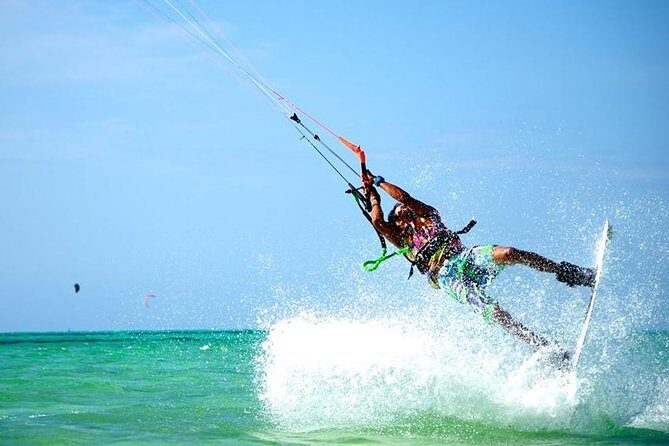
This experience is listed for all skill levels, with a minimum age of 10. You also need moderate physical fitness, which makes sense for things like body drag and board control in water.
It’s especially good if:
- you’re a complete beginner who wants a clear path and safety first
- you’re intermediate and trying to clean up starts, upwind riding, or transitions
- you have specific goals and want the instructor to adapt the focus
From instructor feedback you can expect flexibility. One strong example: Mauricio and Roma can adapt their teaching when you want to work on strapless and winging goals, and they can also support a partner who is brand new. In a private setting, that kind of flexibility is where your lesson feels personal instead of templated.
Two groups should pause before booking:
- If you have back problems or serious medical conditions, this is not recommended.
- If you know you’ll be uncomfortable adjusting to weather and wind changes, you might feel stressed by the outdoors reality.
Weather reality in Tulum and how it changes your day
Kiteboarding lives and dies by wind conditions. This experience is subject to favorable weather. If wind and conditions aren’t workable, you might see adjustments to the schedule, or cancellation with an option for an alternative date or a full refund.
In practice, this means you should keep your day flexible. Tulum is a great base for water sports, but wind shifts. If you can give the lesson the right weather window, you’ll get a more complete session.
And here’s the practical mindset that helps: treat the instructor like the plan manager. Good kite coaches can work with what the wind gives them, which is exactly what you want on a coastal day where conditions can change quickly.
Should you book this private kiteboarding lesson in Tulum?
If you want a lesson that’s structured, safety-minded, and tailored to you, this is a strong choice. The private format makes it easier to progress because you get feedback in real time—especially during the hardest parts like setup, waterstarts, and learning to ride upwind.
I’d book it if you value learning fundamentals like the wind window and self-rescue, and you like the idea of practicing a full progression over about three hours. I’d especially lean toward booking if you’re traveling with a partner and want both people supported at their own level.
I’d hesitate if you have medical limits related to the back, if you know you can’t be flexible with weather, or if you’re hoping for a low-effort try-it session with minimal practice. This is hands-on instruction. That’s the point.
FAQ
How long is the private kiteboarding lesson in Tulum?
The lesson is about 3 hours.
Where does the lesson start and end?
It starts at Ahau Tulum (Carretera Tulum a Boca Paila Km. 7.5, Zona Costera, Tulum Beach, 77760 Tulum, Q.R., Mexico) and ends back at the meeting point.
Is the lesson private or shared?
This is private. Only your group participates.
What language is the lesson taught in?
The lesson is offered in English.
What’s included in the price?
Included are an IKO certified instructor, kiteboarding gear, and access to bathrooms, showers, and Wi‑Fi. Paddleboarding boards are also included.
What’s not included?
Transportation, and food and drinks are not included.
What are the age and fitness requirements?
The minimum age is 10 years. You should have a moderate physical fitness level.
What happens if the weather isn’t good enough?
The experience is subject to favorable weather. If it’s canceled due to poor weather, you’ll be offered an alternative date or a full refund.
More Private Tours in Tulum
More Tour Reviews in Tulum
- Selva Maya Eco Adventure Park: Ziplining, Hanging Bridges, Rappelling and Cenote
★ 5.0 · 1,057 reviews