REVIEW · PLAYA DEL CARMEN
Cenote diving Dream Gate
Book on Viator →Operated by Diversland Mexico · Bookable on Viator
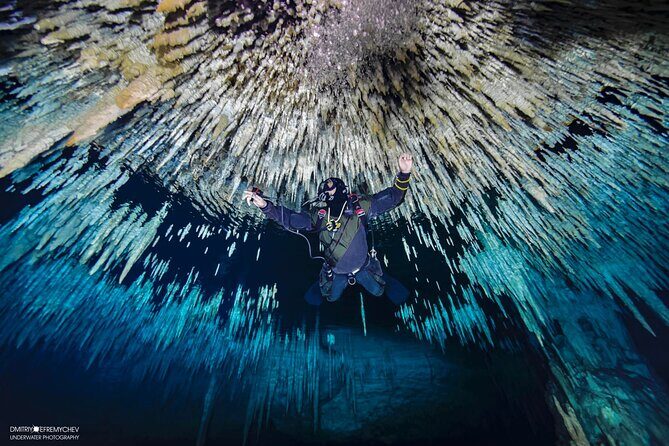
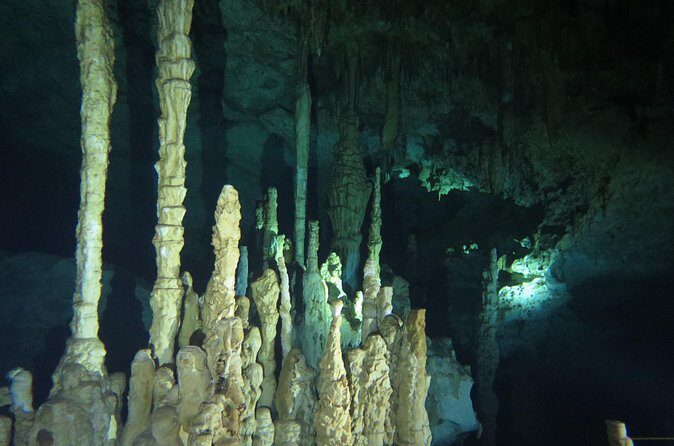
Dream Gate is the kind of cenote that feels built for photos and physics. What makes this one special is the decor: stalactites, stalagmites, and column formations against a darker sediment background that makes the shapes pop in a way you don’t always get. I also like that you’re not just doing one route—Dream Gate Upstream and Dream Gate Downstream let you see the cave from two different angles.
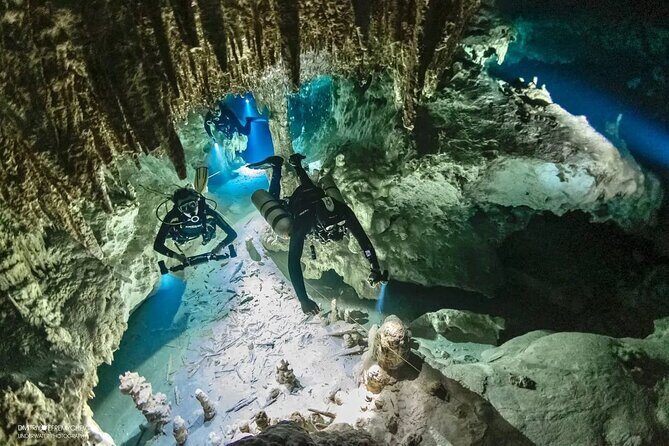
I love the visibility and the way the route guides you between very fine formations. You get that almost-flying feeling when you’re properly controlled, and the experience leans into the delicate geology instead of rushing past it. The guide team is another big win; names like Dima, Steve, and Peter show up for a reason, and they clearly know how to keep the group moving smoothly.
One thing to consider: this is not a laid-back water stroll. You’ll need excellent buoyancy because the rock is fragile, plus the entry/setting can feel simple and a bit precarious since access is basically for scuba participants only.
In This Review
- Dream Gate Cenote: Why This Place Earns the Name
- The Two Underwater Routes: Upstream vs Downstream
- Dream Gate Upstream
- Dream Gate Downstream
- What both routes have in common
- Your Morning Plan: Pickup, Plaza Palmeiras, and the 5-Hour Flow
- What’s Included in the Price (and What You Should Bring)
- Gear, Buoyancy, and Certification Rules You Can’t Ignore
- Minimum age
- Depth and stability expectations
- Why the Formations Feel Different Here (Even If You’ve Done Other Cenotes)
- The Human Factor: Guides Matter More Than You Think
- Price and Logistics: Is $195 Actually Good Value?
- Who Should Book Dream Gate (and Who Might Want to Skip)
- Quick FAQ Before You Go
- FAQ
- How long is the Dream Gate experience?
- Where does the tour start?
- Is pickup included?
- What costs are included in the $195 price?
- Do I need scuba certification?
- What if I need equipment rental or want to cancel?
- Should You Book Dream Gate Upstream and Downstream?
Dream Gate Cenote: Why This Place Earns the Name
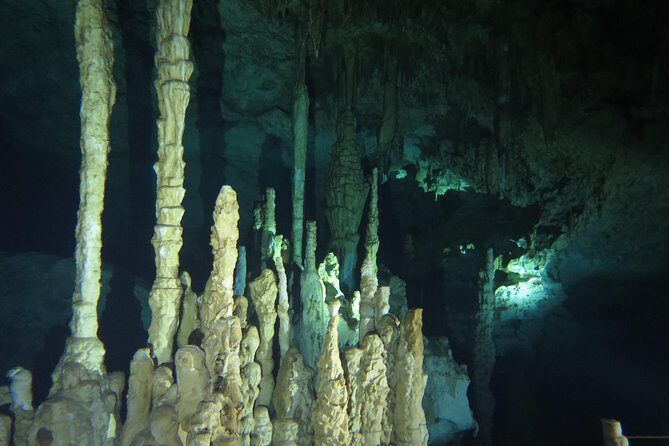
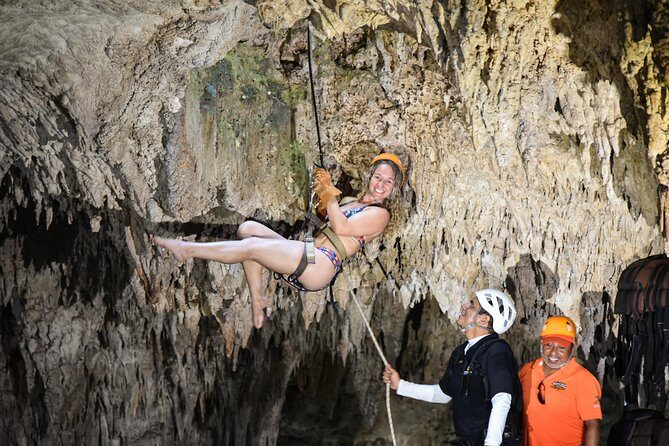
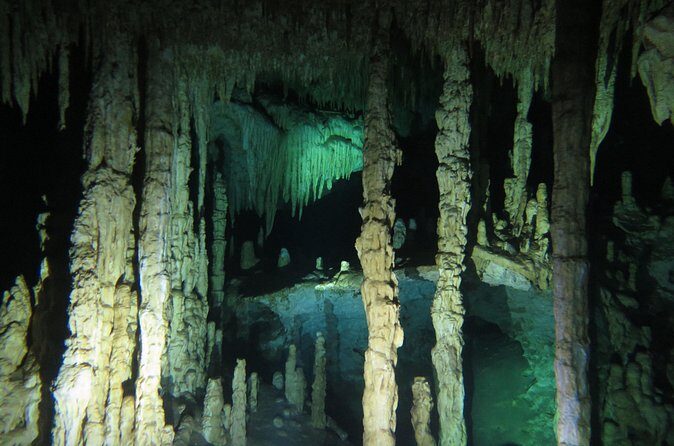
Dream Gate is one of those cenotes where the “wow” comes from details, not just size. The stalactites and stalagmites are the main event, with columns that create a cathedral-like feel underground. Then you add that dark sedimentary background, and suddenly you’re looking at formations with stronger contrast—easier to spot texture, edges, and small shapes while you’re underwater.
The tour also fits a sweet spot for many visitors. It’s long enough to feel like you really got your money’s worth, but it’s not an all-day ordeal. Expect roughly 5 hours total, starting at 8:00am, which works well if you want to keep your afternoons free.
Finally, the “double route” setup is a smart design for a cenote like this. Two different underwater paths means you don’t leave after one segment thinking, OK, that was nice. Instead, you get a second look that can feel like a different mood.
The Two Underwater Routes: Upstream vs Downstream
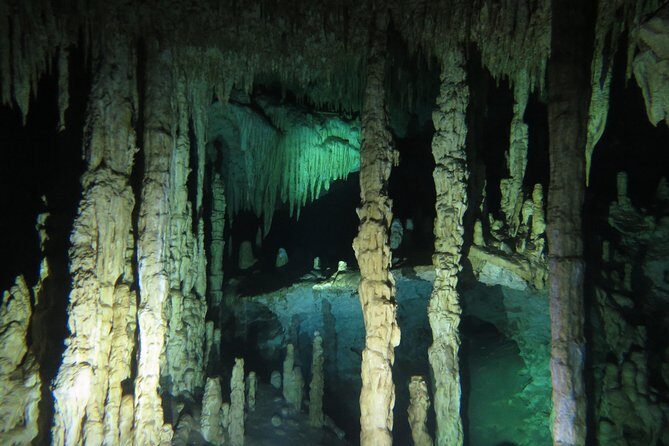
This is the heart of the Dream Gate experience: two separate routes in the same cenote system.
Other cenote tours we've reviewed in Playa del Carmen


Dream Gate Upstream
Upstream tends to feel more dramatic to many people because of how the formations frame your view as you move. The rock shapes can look bigger and more commanding from certain angles, and the route makes it easier to notice how stalactites and columns line up. If you’re sensitive to change, upstream can give you that first big “whoa” moment.
Dream Gate Downstream
Downstream is where you often appreciate the geometry in a slightly different way. One practical tip I took from the general feedback: the order of the two routes can affect which types of formations feel most obvious when you’re still warming up. If you want extra time to focus on how stalagmites and stalactites relate to each other, think about asking the guide how they plan the sequence for your group.
What both routes have in common
Across both segments, the tour is built around excellent visibility and careful movement around delicate rock. You’re not just there to see water and darkness—you’re there for fine geological detail. That’s why buoyancy matters so much: if your control is off, you risk bumping or hovering too close to fragile formations.
Your Morning Plan: Pickup, Plaza Palmeiras, and the 5-Hour Flow
The schedule is straightforward, which I appreciate when I’m on vacation and not in “confusion mode.”
- Start time: 8:00am
- Meeting point: Plaza Palmeiras, C. 11 Sur, Ejidal, 77712 Playa del Carmen
- Pickup: available from hotels across Playa del Carmen, Cancun, and Riviera Maya
- Group size: capped at 15 travelers
That small cap matters. In a cenote environment, you want less crowd pressure while you’re suiting up and getting ready. With a maximum of 15 people, you’re more likely to get clear guidance and fewer delays between steps.
Over the full roughly five hours, you’ll spend time traveling from pickup to the cenote area, gearing up, and then completing the two underwater routes. Because it’s two tanks worth of activity, the day moves at a steady pace rather than feeling like one short stop and a quick exit.
Other scuba diving tours in Playa del Carmen





What’s Included in the Price (and What You Should Bring)
At $195 per person, this tour can feel either pricey or fair—depending on what you already have. Here’s what’s included:
Included:
- Bottled water and snacks
- All fees and taxes
- Two tanks plus weights and a belt
- Hotel pickup and drop-off
- A professional multilingual guide
- Two underwater sessions (one upstream, one downstream)
Not included:
- Equipment rental (listed as $15 USD/day)
- Diving insurance (optional)
So the value equation is pretty clear: you’re paying for transportation, a guide who can manage your group, and the heavy-cost basics of scuba setup like tanks, weights, and belt. If you already own gear, this price likely feels better than if you still need everything from scratch.
My practical advice: if you’re renting equipment, bring swim basics and plan for a little extra time to get everything checked and fitted before the water part starts. Equipment rental is listed as $15/day, so you’ll want to budget that extra cost.
Gear, Buoyancy, and Certification Rules You Can’t Ignore
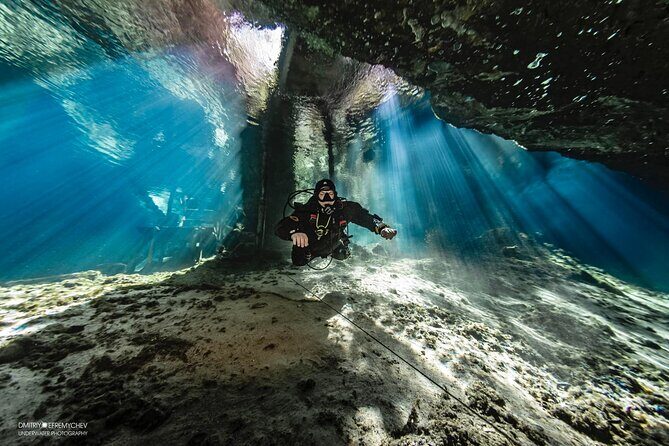
Dream Gate rewards control. That’s not a vague statement—it’s part of the safety and preservation logic of cenotes.
The tour requires:
- Proof of scuba certification for anyone participating in certified activity, stated as Advanced Open Water Diver (PADI) or equivalent
- A health questionnaire before you go in
- Avoid underwater activity within 24 hours of flying (not recommended)
They also call out that some pre-existing conditions—like asthma or heart conditions—may prevent you from participating. The key is simple: if anything applies to you, talk to your doctor before booking. Don’t try to “test it” on vacation.
Minimum age
Minimum age is 15 years.
Depth and stability expectations
From the available feedback, expect maximum depth around 5–6 meters, with a strong emphasis on stability and control. That depth range can sound easy on paper. But in a cenote with delicate rock, staying stable is the real challenge, not just the number on the gauge.
Why the Formations Feel Different Here (Even If You’ve Done Other Cenotes)
Plenty of cenotes are pretty. Dream Gate is memorable because it’s built around fine texture and contrast.
A few traits I’d focus on as you plan:
- Dark sediment background helps highlight shapes, so you see more than just silhouettes.
- Very fine formations create a “close to the rock” feeling—when you’re properly weighted and neutrally buoyant.
- The route format gives you two chances to notice different formation clusters instead of repeating the same view.
If you’ve done other cenotes, you’ll notice Dream Gate is less about wide open passages and more about careful navigation between formations. That’s why the best results come when you stay calm, breathe steadily, and follow your guide’s cues.
The Human Factor: Guides Matter More Than You Think
This experience is only as good as the guide support, and the feedback here points to strong staffing. Names like Dima, Steve, and Peter come up, and that’s a good sign because cenote conditions can change fast—visibility, currents (even mild ones), and group spacing.
I’d also pay attention to the “how” of your guide. In a fragile-rock environment, the guide’s ability to manage buoyancy, positioning, and distance from formations is what protects the cenote and keeps your experience smooth. With a multilingual guide, you’re also less likely to miss key instructions before you enter the water.
Price and Logistics: Is $195 Actually Good Value?
Let’s break it down without hand-waving.
For $195, you get:
- Hotel pickup and drop-off (big deal in this region)
- Snacks and bottled water
- A professional multilingual guide
- Two tanks, weights, and a belt
- Access to the cenote with two different routes
Equipment rental is extra at $15/day, and insurance is optional.
So the “value” depends on whether you’d otherwise pay for:
- Transport from your hotel area
- Tanks and weights (often expensive on their own)
- A guide to run the two-route plan
If you’re traveling without gear, you’ll pay the rental fee. But you still avoid the most expensive pieces of the setup. If you already own your scuba gear, you might find the tour still feels fair because you’re basically paying for guidance, tanks, and the two-route plan—not just the underwater site access.
For the price, I’d call this a solid deal if you meet the certification requirements and you’re comfortable with buoyancy control.
Who Should Book Dream Gate (and Who Might Want to Skip)
Book this if:
- You’re an experienced scuba participant with Advanced Open Water level certification or equivalent
- You want formations you can see clearly and close up, not just a quick water view
- You like structured guidance and a small group cap (max 15)
Skip it or think hard if:
- You’re not confident controlling buoyancy in confined, delicate rock areas
- You have medical considerations (asthma, heart conditions, etc.) and haven’t cleared it with a professional
- You’re arriving right after flying and can’t wait out the 24-hour window
This is also a good match if you like the idea of seeing a single cenote from two route perspectives. Two sessions gives you more “art time” to look at the shapes and less chance of feeling like one segment was enough.
Quick FAQ Before You Go
FAQ
How long is the Dream Gate experience?
It’s listed at about 5 hours.
Where does the tour start?
The meeting point is Plaza Palmeiras, C. 11 Sur, Ejidal, 77712 Playa del Carmen, Q.R., Mexico. The activity ends back at the meeting point.
Is pickup included?
Yes. Pickup is offered for all hotels in Playa del Carmen, Cancun, and Riviera Maya.
What costs are included in the $195 price?
Included are bottled water, snacks, all fees and taxes, two tanks, weights and belt, hotel pickup/drop-off, a professional multilingual guide, and two underwater sessions.
Do I need scuba certification?
Yes. The information states evidence of certification is required for participants wishing to participate in certified activity (Advanced Open Water Diver PADI or equivalent).
What if I need equipment rental or want to cancel?
Equipment rental is listed at $15 USD/day, and diving insurance is optional. Cancellation is free up to 24 hours in advance for a full refund.
Should You Book Dream Gate Upstream and Downstream?
I’d book it if you want strong formation visibility, a small group, and a tour that treats the cenote like a real underwater space—meaning buoyancy and control are part of the deal. The double-route plan is the standout value: you get more than one look at the “Dream Gate” look and you’re not stuck with just one short segment.
On the other hand, if you’re uncomfortable with stability, aren’t cleared medically, or you can’t meet the certification requirement, you’ll likely spend the day stressed instead of impressed. If you fit the requirements and you like geology up close, Dream Gate is one of those Playa del Carmen underwater experiences where the details are the point.