REVIEW · PLAYA DEL CARMEN
Cenotes diving
Book on Viator →Operated by Diversland Mexico · Bookable on Viator
Cenotes look different at sunrise. This 5-hour Playa del Carmen trip is built around the Yucatán’s morning sunlight effects, with two underwater stops in crystal-clear freshwater. I love the hotel pickup and drop-off convenience, and I love that you get pro gear like tanks, weights, and belts plus a multilingual instructor. One thing to consider: you need proof of certification (Open Water Diver or equivalent), and some health conditions can limit participation.
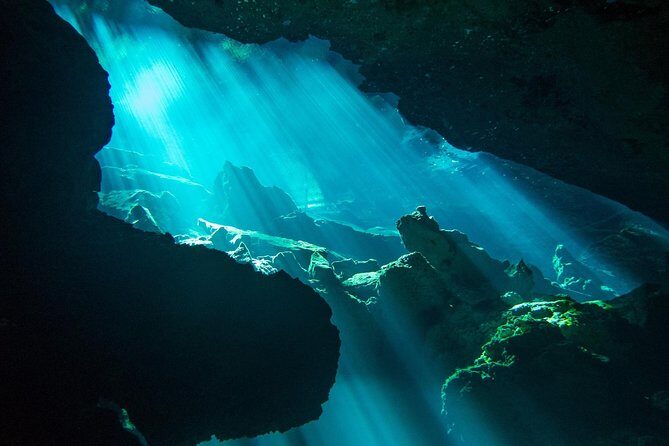
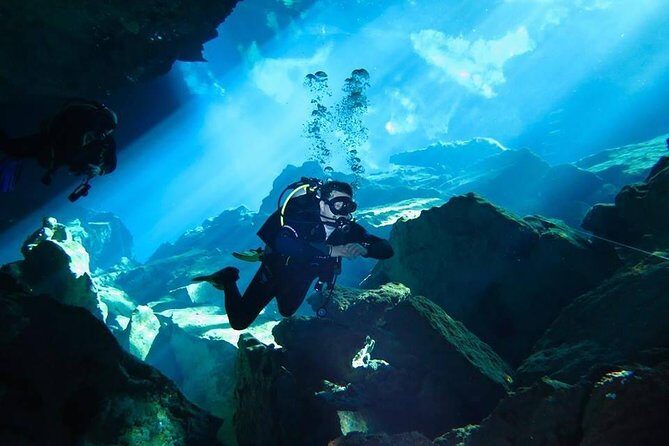
The plan is simple: early start, kit up, then experience massive limestone formations and halocline light tricks inside cenotes. You’ll see scenes that feel like curtains of light and big cave rooms with bats overhead, plus wildlife in places like Ponderosa. If you’re new to cenote water layers, go in with patience and follow your instructor’s pacing.
In This Review
- Key Highlights You’ll Actually Notice
- The 8:00 a.m. Setup That Makes Cenotes Feel Easier
- Two Cenote Pairs Planned for Light and First-Timer Comfort
- Chac Mool and Kukulkan: Curtains of Light and Jungle Underwater Views
- Ponderosa (Jardín del Edén): The Mossy Natural Swimming Pool
- Tajma Ha (Taj Majal): A Palace of Rooms Under a Bat Cave
- Equipment and Multilingual Coaching: What Helps You Enjoy It
- Logistics That Affect Your Comfort (Not Just the Fine Print)
- Price and Value at $260 per Person
- Who Should Book This Cenote Pair Plan
- Tips to Get the Most From These Cenotes
- Final Call: Book or Skip?
- FAQ
- What is included in the Cenotes scuba experience?
- How long does the tour last?
- How much does it cost?
- What cenotes will I visit?
- Do I need any scuba certification?
- What is the minimum age to participate?
- Where does pickup happen?
- What language will the instruction be in?
- Is diving insurance included?
- Can I get a full refund if I cancel?
Key Highlights You’ll Actually Notice
- Early-morning sun beams are the whole point, especially in Chac Mool/Kukulkan and Ponderosa/Tajma Ha.
- Two different cenotes (2 sessions total) gives you variety without turning the day into a long travel marathon.
- Pro equipment is included (tanks, weights, belts), so you don’t have to hunt rentals or fit yourself.
- Multilingual coaching in English helps you communicate fast and focus on neutral buoyancy.
- Small limit of 15 travelers keeps the experience controlled and easier to manage with a group.
The 8:00 a.m. Setup That Makes Cenotes Feel Easier
This runs from 8:00 am and clocks in at about 5 hours, which is a sweet spot for a cenote morning. You’ll either meet at Plaza Palmeiras (C. 11 Sur, Ejidal, Playa del Carmen) or use pickup, since the tour offers hotel pickup across Playa del Carmen, Cancun, and the Riviera Maya.
Here’s why timing matters: the most dramatic lighting in these cenotes is usually tied to sun angle. That’s why the early start feels purposeful, not rushed. It also helps you avoid that late-morning letdown when the light effects get less dramatic.
Check-in and gear happen on the way in. You’re provided all necessary equipment (including tanks, weights, and belts) and bottled water plus snacks during the experience. For me, that combination is a big value point because you’re not adding extra costs or logistical stress on top of the tour price.
Other scuba diving tours in Playa del Carmen

Two Cenote Pairs Planned for Light and First-Timer Comfort
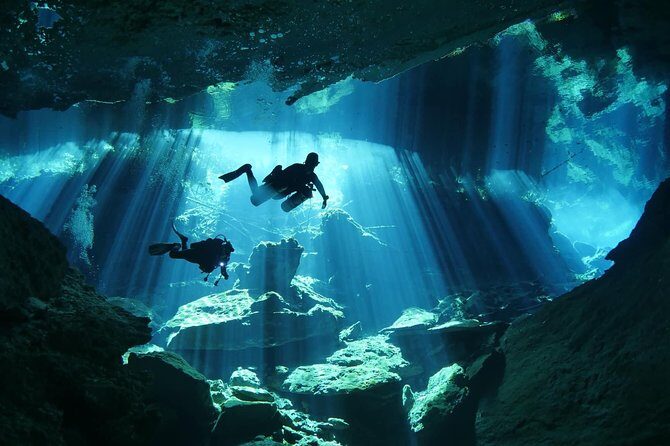
The route focuses on “first” friendly cenotes on the Yucatán Peninsula using a two-stop approach. The cenotes are described in pairs based on their look and lighting effects: Chac Mool and Kukulkan and Ponderosa and Tajma Ha.
You’ll do 2 sessions in 2 different cenotes. The names matter because each site offers a different style of underwater room and lighting behavior.
- Chac Mool / Kukulkan are highlighted for a curtain-of-light look and jungle-view vibes underwater.
- Ponderosa / Tajma Ha are highlighted for palace-like chambers and light streaming from holes overhead.
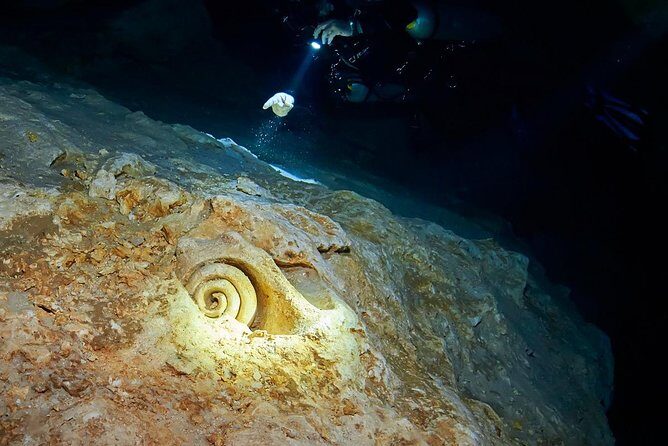
The smart part is variety. You’ll get formations, fossils in stone, and those “how is there so much light down here?” moments without needing advanced routing or a full-day schedule.
Chac Mool and Kukulkan: Curtains of Light and Jungle Underwater Views
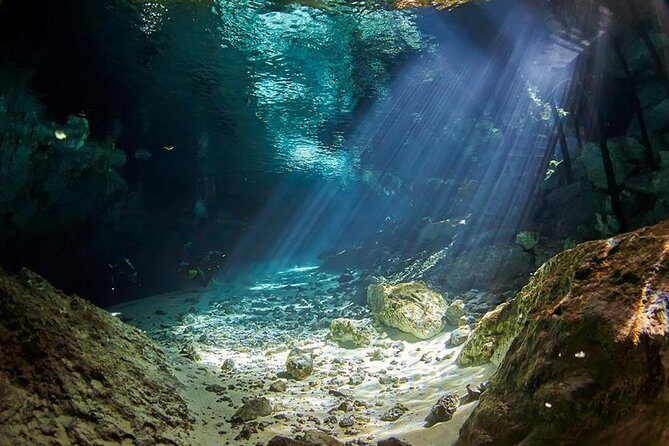
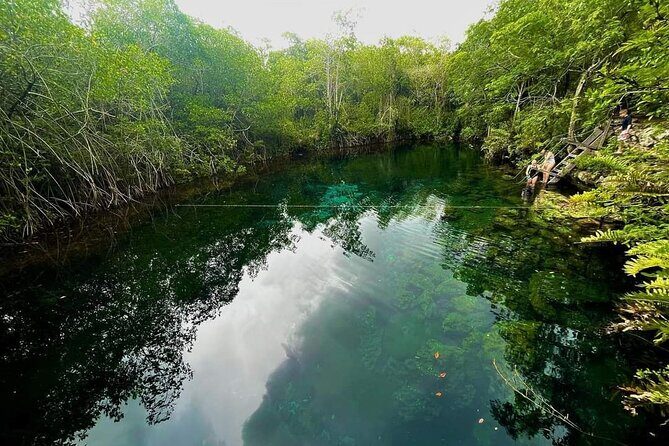
These cenotes are set up for the classic sunlight look. In the morning, the description emphasizes a breathtaking curtain of light plus a jungle view sensation underwater.
What you should pay attention to is how light changes with small shifts in angle. In cenotes, you often get layered water behavior too, and the tour specifically mentions halocline and multiple light-play areas. Translation: your visibility might feel “wow” in one moment and slightly different in another, and that’s normal.
The underwater world here is described as crystal-clear freshwater with big cave formations and fossils. That’s the kind of detail that makes a cenote stop feel like more than a pretty photo spot. You’re looking at limestone history and the way the cave has been shaped, not just water in a room.
If you’re prone to rushing, don’t. Slow movements help you stay calm, trim, and ready for the light changes.
Ponderosa (Jardín del Edén): The Mossy Natural Swimming Pool
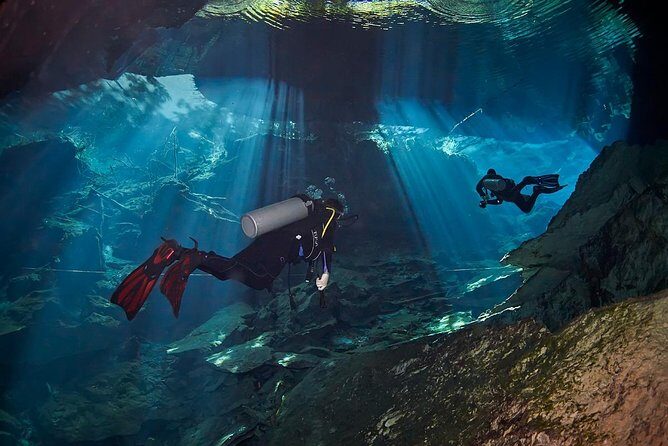
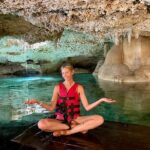
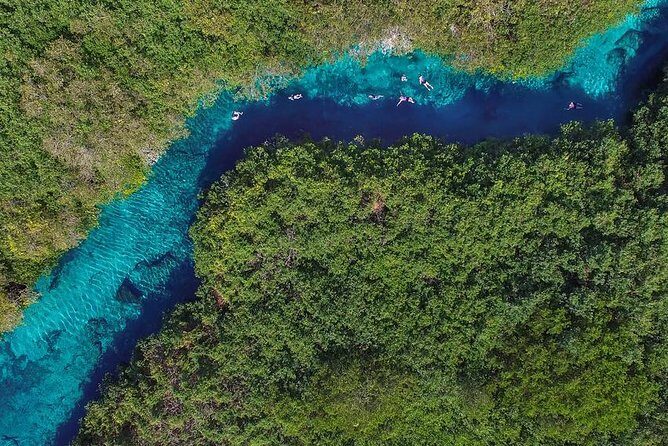
Ponderosa is described as a natural swimming pool of crystal-clear water. If you want a cenote that feels approachable and scenic, this is the one the description leans into.
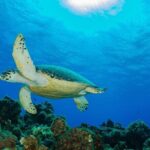
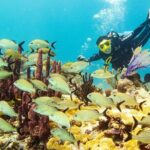
One of the best practical details here is wildlife and plant life. You may see different fishes, turtles, and freshwater eels around large rocks covered with green moss. That’s not just “pretty scenery”; it’s also the reason this place can feel a bit more alive than some stark limestone rooms.
The tour also points out halocline and wonderful lights effects on sunny days. So even if you’re mentally comparing it to a “swim pool,” expect lighting tricks that can make it feel more cavern-like once the sun hits the right angles.
For photographers, it’s a good target. For divers (or certified underwater explorers), it’s also a nice training-friendly environment because the scene reads well: you can find reference points and keep buoyancy under control.
Tajma Ha (Taj Majal): A Palace of Rooms Under a Bat Cave
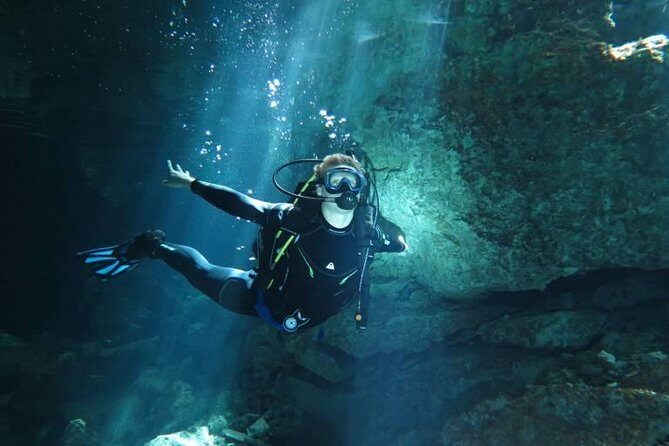
Tajma Ha is described as a wide-open room underneath an air-filled bat cave. That sounds dramatic, and the visuals match: cavern space with light streaming through holes in the ceiling, plus stalactites, limestone formations, and huge chambers.
The “palace” comparison in the description isn’t just poetic. With big chambers and corridor-like areas, you can get that sense of moving through rooms rather than a tight tube. It’s also where the ceiling lighting can feel almost stage-lit.
Because this is a cavern-style environment, keep your focus on instructor cues. The tour notes you’ll encounter halocline and light effects, which means your depth and your body position matter for what you see and how stable you feel.



Equipment and Multilingual Coaching: What Helps You Enjoy It
This experience includes professional equipment like tanks, weights, and belts, plus a professional multilingual guide. English is listed as the offered language, and reviews mention multiple languages across the team, including Russian and partly Spanish.
The review highlights that the instructors are calm, patient, and safety-minded. Names that come up often include Sergey and Liz, plus team members like Evgenia, Dimitri, Andy, Dima, and Anna. In real terms, that matters because the best instructor is the one who helps you get your bearings fast.
One review example that’s especially useful: when someone felt a bit confused in the layered water and struggled to reach neutral buoyancy, instructor Liz offered help and coaching while keeping the experience fun. That’s what you want from a guide in a cenote: support that prevents panic, without turning the trip into a lecture.
Another strong theme: punctual pick-up and careful organization. People explicitly mention that the team was attentive to details and followed safe practices. That’s the difference between a smooth morning and a stressful scramble.
Logistics That Affect Your Comfort (Not Just the Fine Print)
This is offered as a private group, with a maximum of 15 travelers. That’s a good size for two cenote stops because groups can be managed without turning every change into a waiting game.
You’ll also get bottled water and snacks. In a morning that starts at 8:00 am, that’s not trivial. Cenote trips ask your body to focus and your brain to do math you didn’t plan to do. A snack can keep your energy steady.
A mobile ticket is provided, and confirmation is received within 48 hours of booking, subject to availability. You’ll also need evidence of your dive certification (Open Water Diver or analog).
And yes, you’ll be asked to complete a health questionnaire before diving. Some conditions like asthma or heart problems may prevent you from participating, so it’s worth consulting your doctor if you’re unsure.
Price and Value at $260 per Person
At $260 per person, you’re paying for a fully packaged morning, not just a location. Here’s what’s included:
- hotel pickup and drop-off
- all fees and taxes
- all necessary equipment (tanks, weights, belts)
- professional multilingual guide
- 2 sessions in 2 different cenotes
- bottled water and snacks
- private group setup
What makes this price feel reasonable is that cenotes can be logistics-heavy. Without pickup, you’d burn time getting everyone positioned, and you’d still need equipment. By bundling transport, gear, and guided sessions, the tour keeps your day simple.
Optional diving insurance is not included. That means you should check whether your own policy covers scuba activities. If it doesn’t, it’s usually cheaper to buy coverage in advance than to gamble on it.
Who Should Book This Cenote Pair Plan
This is a great fit if you:
- have Open Water Diver certification (or an equivalent)
- enjoy cave-like rooms and limestone formations
- want that morning light look that makes photos and memories better
- like small-group structure and clear guidance
It may be less ideal if you:
- aren’t comfortable with the idea of layered water behavior (the tour specifically mentions halocline)
- have medical concerns that could affect participation
- are flying very recently (diving within 24 hours of flying is not recommended)
It also fits a wide range of experience levels within certification, because instructors are described as patient and coaching-oriented. If you’re new to cenotes specifically, you’ll want to listen closely and move slowly, but you can still have a great day.
Tips to Get the Most From These Cenotes
Keep these practical points in mind:
- Go in rested and hydrated since the morning starts early and you’ll spend time in and around water.
- Pay attention to buoyancy cues during the halocline moments. Your comfort improves fast when you maintain stable position.
- Don’t rush the light shots. The best lighting comes as you shift angle and timing.
- If you get nervous, say so early. The team’s reputation for calm coaching shows that they’re used to settling nerves.
Also, bring a mindset for “structure.” Cenotes can be visually confusing because of layered light and depth cues. When you treat it like a guided lesson in buoyancy and calm movement, the experience becomes easier to enjoy.
Final Call: Book or Skip?
I’d book this if you want a tight, high-impact cenote morning in Playa del Carmen with pro gear, pickup, and strong instruction. The two-cenote plan makes sense: you’ll see different room styles and lighting behaviors in a single day, and you get guidance that’s repeatedly described as organized and patient.
I’d think twice if you’re not currently certified, if you have health questions that your doctor hasn’t cleared, or if you’re hoping for a casual sightseeing-only day. This is built for certified underwater exploration, not a stroll.
If you match the requirements, you should come away impressed by the combination of morning light effects, clear freshwater visibility, and those big limestone formations that make cenotes feel like real places, not just stops.
FAQ
What is included in the Cenotes scuba experience?
It includes private group service, bottled water and snacks, all fees and taxes, all necessary equipment, hotel pickup and drop-off, a professional multilingual guide, and 2 sessions in 2 different cenotes.
How long does the tour last?
The duration is about 5 hours.
How much does it cost?
The price is $260.00 per person.
What cenotes will I visit?
The plan combines cenotes chosen for strong sunlight effects. The cenotes listed are Chac Mool and Kukulkan, plus Ponderosa (Jardín del Edén) and Tajma Ha (Taj Majal). You’ll do 2 sessions in 2 different cenotes.
Do I need any scuba certification?
Yes. You’ll need proof of certification such as Open Water Diver or an equivalent.
What is the minimum age to participate?
The minimum age is 15 years.
Where does pickup happen?
Pickup is offered for all hotels in Playa del Carmen, Cancun, and the Riviera Maya. The listed meeting point is Plaza Palmeiras (C. 11 Sur, Ejidal, 77712 Playa del Carmen, Q.R., Mexico).
What language will the instruction be in?
English is offered.
Is diving insurance included?
No. Diving insurance is optional.
Can I get a full refund if I cancel?
Yes, you can cancel up to 24 hours before the experience start time for a full refund.