REVIEW · TULUM
Group Kiteboarding Lesson in Tulum
Book on Viator →Operated by Mexican Caribbean Kitesurf · Bookable on Viator
Wind first, thrills second.
I love the way this lesson starts with kite and wind theory you can actually use, then turns it into hands-on practice. I also love the focus on safety systems and self-rescue, not just getting dragged around by a kite. The only real drawback is that learning depends on the wind that day, so you’ll want some flexibility in your schedule.
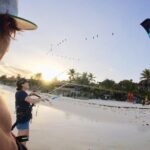
You’ll work with a small coaching setup, typically 2 customers per instructor, and you may recognize coaching names like Mauricio, Antonio, and Beau from past lessons. Expect patient instruction, clear motivation, and a progress plan that takes you from first control on the sand to basic riding skills on the water.
In This Review
- Key things you’ll notice right away
- Kiteboarding in Tulum: what you’re really learning in 3 hours
- Small group coaching: 2 students, 1 instructor
- Beach skills: kite and wind theory, bar safety, and self-rescue
- Into the water: body drag upwind, power strokes, and first water starts
- When Tulum wind changes: how coaching helps you keep progressing
- Included extras that matter: gear, bathrooms/showers, Wi‑Fi, and paddleboards
- Price and value: why $150 can be a smart deal for beginners
- Meeting point at Ahau Tulum: where to start and how to time your morning
- What’s not included: transport and food and drinks
- Who should book this kiteboarding lesson in Tulum
- Who should think twice (or ask first)
- Should you book this group kiteboarding lesson in Tulum?
- FAQ
- How long is the kiteboarding lesson in Tulum?
- What group size should I expect?
- What’s the minimum age to participate?
- Is the lesson taught in English?
- What’s included in the price?
- Where do I meet the instructor?
- What happens if weather is poor, or if I need to cancel?
Key things you’ll notice right away
- Beach-first learning so you don’t guess when it’s time to get wet
- Wind window + bar/safety systems taught in practical terms
- Self-rescue technique covered early so panic has fewer places to hide
- Progression from body drag to water start with assistance and then solo attempts
- You keep momentum by practicing both upwind and downwind riding patterns
- Tulum wind can shift, and your coach may adjust to find better conditions when possible
Kiteboarding in Tulum: what you’re really learning in 3 hours
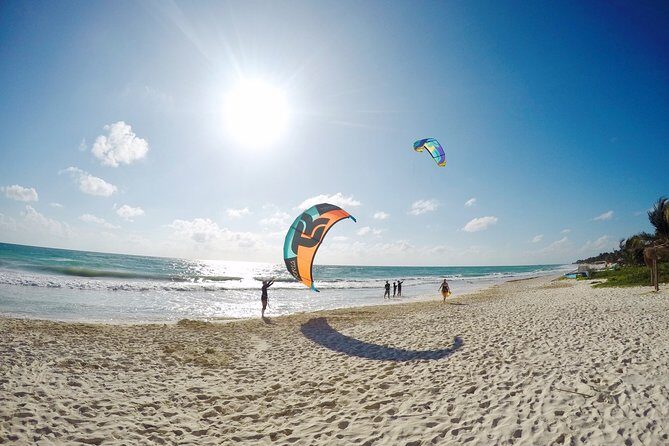
This is a focused skills lesson, not a “look at the cool kite” experience. In about three hours, you’ll go through the basics that matter most when kiteboarding is working and when it stops working.
The big win is that the instruction is step-by-step. You learn how the kite behaves in relation to the wind, then you learn how to manage the kite and the bar in a controlled way. After that, you move into water work that builds toward your first real ride patterns. If you’ve ever tried to learn from videos and felt like the kite just has a mind of its own, this format is built to reduce that frustration.
Other Tulum ruins tours we've reviewed in Tulum



Small group coaching: 2 students, 1 instructor
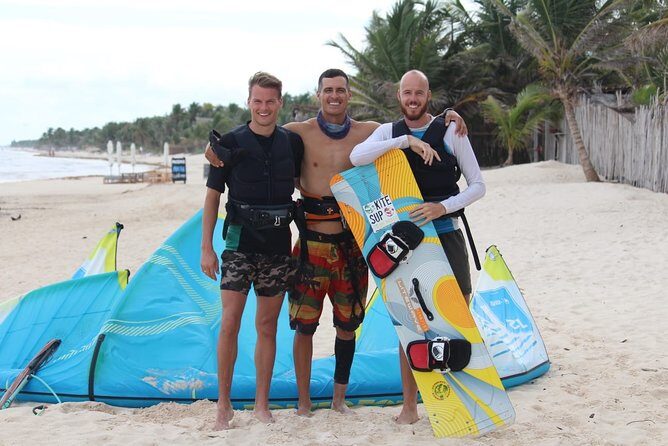
A key detail here is the group size. It’s designed as a group lesson with 2 customers and 1 instructor, which is a sweet spot. You get enough attention that you’re not standing around waiting, but it’s still social enough that the day doesn’t feel like a sterile private classroom.
Instructors are IKO certified, and you’ll feel it in how they teach. Past learners highlighted Mauricio and Antonio for coaching that’s both competent and motivating. Another instructor, Beau, was praised for showing techniques in a calm, encouraging way. That matters because kiteboarding is physical and technical at the same time. Good coaching keeps the day moving while you build the muscle memory.
Beach skills: kite and wind theory, bar safety, and self-rescue
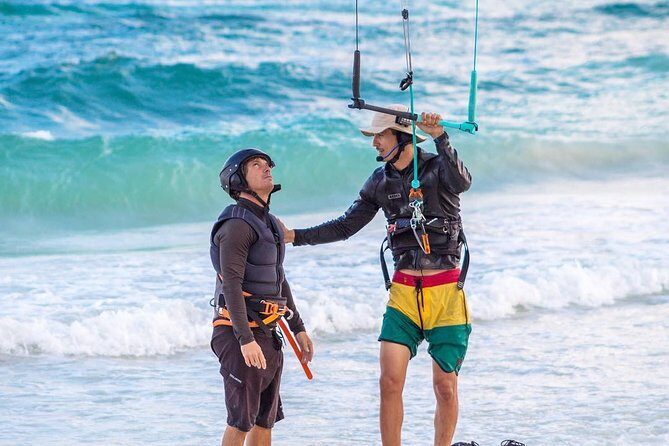
Your first stage is all about understanding the kite as a system. Before you ever commit to the water, you’ll cover:
- Kite and wind theory
You’ll learn concepts like the wind window, which helps you understand why the kite pulls the way it does. This is where beginners often get stuck, because the kite doesn’t just “fly forward.” It responds to wind angle and your kite position.
- Setting up the kite and lines
You’ll practice how the equipment goes together and why setup accuracy affects everything that follows. This is the unglamorous part, but it’s also one of the fastest ways to improve your safety and control.
- Inside the bar and safety systems
You’ll understand what the bar controls and what the safety features are meant to do. The goal isn’t memorizing parts. It’s knowing how to react when something feels off.
- Self-rescue technique
This is taught before you’re “in too deep” (literally and mentally). Knowing self-rescue steps early reduces that helpless feeling people can have when they’re new.
- Kite control
You’ll put it together: wind awareness, kite handling, and control skills that you can repeat. This part sets you up for the water portion, because the water skills depend on kite stability.
The best part of doing this on the sand is that you can learn from mistakes without the extra pressure of board speed and being in the surf. It’s also just easier to ask questions right when something doesn’t click.
Into the water: body drag upwind, power strokes, and first water starts
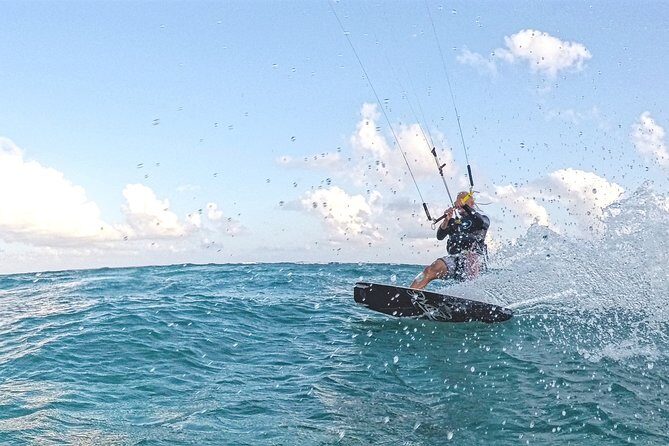
Once you’re moving into the water phase, the lesson turns from “how it works” to “how to make it work.” Here’s the progression you’ll follow:
- Body drag upwind
This helps you learn how to manage position relative to the wind. In practical terms, it’s training your body and the kite together so you’re not randomly drifting.
- Power strokes
This teaches you how to generate the pull you need when you’re ready to progress. Think of it as learning when to ask for power and when to calm the kite down.
- Waterstart with assistance
Your instructor helps you with the timing and body mechanics so you can experience what a successful start feels like.
- Waterstart solo
Then you attempt it on your own. This is where you’ll discover whether you truly understood the steps or just nodded along.
- Ride downwind and ride upwind
You practice two crucial directions. Downwind is usually where it feels easiest to get the hang of balance. Upwind is where beginners often realize that control and edging take work.
- Transitions
You’ll finish with transitions, which is the bridge between basic control and the beginning of real riding flow.
If you’re a true beginner, expect that some parts will feel awkward at first. That’s normal. The value here is that you’re not just sent out to struggle. You’re coached through a set order of tasks that build on each other.
When Tulum wind changes: how coaching helps you keep progressing
Kiteboarding is brutally dependent on the weather. Even in Tulum, wind conditions can be inconsistent.
What’s good here is that your coach can adjust the plan when conditions aren’t ideal. One learner described how the instructor shifted lesson timing to the most optimal wind window. Another mentioned being taken to El Cuyo, further north, to find better wind for continued learning.
What this means for you: don’t book the rest of your day like a robot. If your session needs a tweak for wind, treat it as part of the sport, not a delay. The instructors’ goal is to help you practice in conditions where you can actually learn.
A few more Tulum tours and experiences worth a look





Included extras that matter: gear, bathrooms/showers, Wi‑Fi, and paddleboards
On paper, the lesson includes kiteboarding gear and instruction from an IKO certified instructor. But you’ll also appreciate the small comfort items that make a wet, sunny morning easier:
- Bathrooms and showers
- Wi‑Fi on site
- Paddleboarding access as part of the operator’s offering at Mexican Caribbean Kitesurf & Paddlesurf
That last item can be useful when you’re waiting for the right wind moments or if the day needs a bit of reshuffling. It also gives you a backup activity so you aren’t stuck feeling like your vacation hinges entirely on the kite.
Price and value: why $150 can be a smart deal for beginners
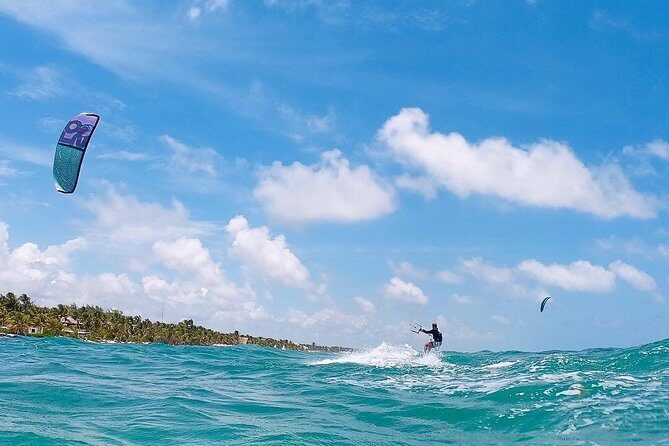
At $150 per person for about 3 hours, this pricing lands in a realistic range for guided kite instruction. Here’s why I think it can be good value:
- You’re paying for structured teaching, not just board time.
- The group setup (2 students per instructor) usually leads to more hands-on coaching than you’d get from larger groups.
- All the kiteboarding gear is included, which saves you the headache of rentals and makes it easier to show up prepared.
- You get a safety-forward lesson: wind theory, bar/safety systems, and self-rescue are not optional add-ons in this sport.
The main “cost” you should plan for is not money. It’s wind dependence. If conditions are weak, your progression might take more time than you hoped. But that’s kiteboarding, not bad instruction.
Meeting point at Ahau Tulum: where to start and how to time your morning
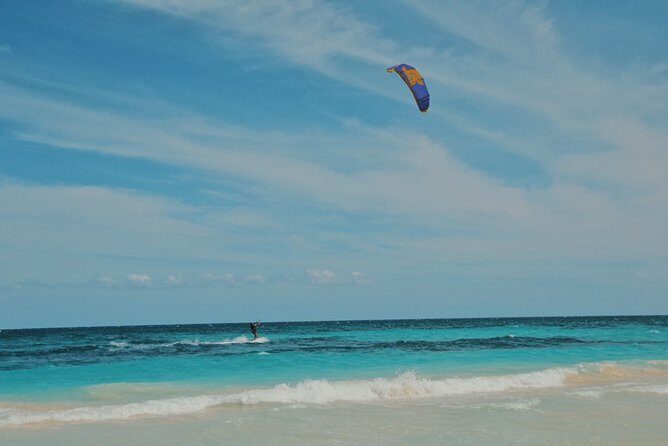
The lesson starts at:
Ahau Tulum
Carr. Tulum a Boca Paila Km. 7.5, Zona Costera, Tulum Beach, 77760 Tulum, Q.R., Mexico
It ends back at the same meeting point.
A practical tip: arrive with enough time to handle sunscreen, gear briefing, and any bathroom needs before you’re in motion. Kiteboarding days go fast, and rushing before you meet the instructor is one of the easiest ways to feel out of sync.
Also, plan for sun. You’re on the beach for the theory and setup parts, then you’re in the water for the skills practice. Sunscreen matters. Hat matters. Water matters.
What’s not included: transport and food and drinks
Two things are explicitly not included: transportation and food and drinks.
So if you’re planning a full day, I’d treat the lesson as the core event and build in time to eat before or after. If you finish closer to the afternoon, you’ll be grateful you didn’t skip lunch.
Some past learners even mentioned extra touches like tacos at the end, but since food and drinks aren’t listed as included, don’t count on it as a guarantee. Bring your own plan for meals either way.
Who should book this kiteboarding lesson in Tulum
This experience is a strong fit if you:
- Want a beginner-friendly progression with structured steps from land to water
- Prefer clear coaching and safety-first instruction
- Have moderate physical fitness and can handle active water practice
- Are at least 10 years old
It’s also offered in English, so you’ll be able to follow the instruction comfortably if you’re a confident English speaker.
Who should think twice (or ask first)
It’s not recommended if you have back problems or serious medical conditions. If you’re unsure about whether kiteboarding is appropriate for your health, it’s worth asking before you commit.
On the upside, the experience allows service animals. If that applies to you, you’re covered under the stated policy.
Should you book this group kiteboarding lesson in Tulum?
If you want a real shot at learning kiteboarding fundamentals in a short time, I think this is a solid choice. You get IKO certified instruction, you practice the essentials in order, and you’re not left to figure out safety or wind control on your own.
It’s especially worth booking if you like coaching that’s patient and motivating. Names like Mauricio and Antonio come up for a reason, and the teaching style described by past learners suggests you’ll feel supported while you learn technical skills.
Skip it only if you’re unwilling to be flexible with wind and timing. Kiteboarding can’t be forced. When the wind cooperates, you’ll move quickly through the lesson steps. When it doesn’t, the best coaches will still help you keep progressing, just not on a perfect schedule.
FAQ
How long is the kiteboarding lesson in Tulum?
It lasts about 3 hours.
What group size should I expect?
The lesson is set up as a group format with 2 customers and 1 instructor.
What’s the minimum age to participate?
The minimum age is 10 years.
Is the lesson taught in English?
Yes, it’s offered in English.
What’s included in the price?
You get an IKO certified instructor, kiteboarding gear, and access to bathrooms, showers, and Wi‑Fi. Paddleboarding is also included. Transportation and food and drinks are not included.
Where do I meet the instructor?
The meeting point is Ahau Tulum, Carr. Tulum a Boca Paila Km. 7.5, Zona Costera, Tulum Beach, 77760 Tulum, Q.R., Mexico, and the activity ends back there.
What happens if weather is poor, or if I need to cancel?
The experience requires good weather. If it’s canceled due to poor weather, you’ll be offered a different date or a full refund. For cancellations, it’s free cancellation up to 24 hours in advance for a full refund; within 24 hours, the payment isn’t refunded.
You Might Also Enjoy

More Workshops & Classes in Tulum
More Tour Reviews in Tulum
- Selva Maya Eco Adventure Park: Ziplining, Hanging Bridges, Rappelling and Cenote
★ 5.0 · 1,057 reviews