REVIEW · COZUMEL
Open Water Course Cozumel
Book on Viator →Operated by Be Diving Scuba Academy · Bookable on Viator
Your first hours underwater start in Cozumel. This PADI Open Water Diver course is built to get you off the checklist and into real skills fast, with practice done by your instructor and a marine-conservation mindset from day one. I love how strongly they focus on fundamentals like buoyancy control, not just passing exercises. I also like the patient teaching style, where instructors slow down when you need it and build confidence step-by-step. One consideration: you’ll want moderate fitness and good weather, since the schedule can flex between 2 and 3 days.
You can handle the theory in English either online or in a classroom, then move into hands-on work with the gear. It’s a private tour/activity, so it’s just your group, and it ends back at the meeting point. The course runs about 3 days on average (often faster), with training tied to Cozumel and the Mayan Riviera area, plus a start in San Miguel de Cozumel and a listed ticket redemption point in Playa del Carmen.
In This Review
- Key things that make this course work
- PADI Open Water in Cozumel: what the 2- or 3-day schedule really means
- Theory first: online or classroom knowledge development
- Pool skills near Playa: the part that makes you feel safe later
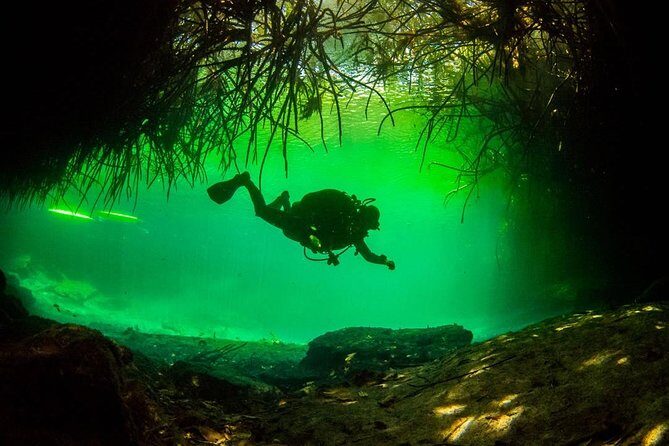
- From cenotes to the Mesoamerican reef: your open-water sessions
- Marine conservation lessons that actually affect how you move
- Gear, instructors, and safety: small-group attention that builds confidence
- Value check: is $600 a good deal for Open Water?
- Where you start in San Miguel de Cozumel, and how to plan around the addresses
- Who this Open Water course suits best
- Should you book this Open Water course in Cozumel?
- FAQ
- How long is the Open Water course in Cozumel?
- What is included in the PADI Open Water course?
- Can I do the theory part online?
- What equipment will I learn with?
- Where does the course start and end?
- Where do I redeem my ticket?
- Is this a private course?
- What language is the course offered in?
- Is there a fitness requirement?
- What if weather conditions are poor?
- What is the cancellation policy?
Key things that make this course work
- Two-day possibility for Open Water Diver: the program can be done in 2 or 3 days depending on your availability and pacing.
- Pool training that actually builds control: you get skill reps and comfort with gear before open water.
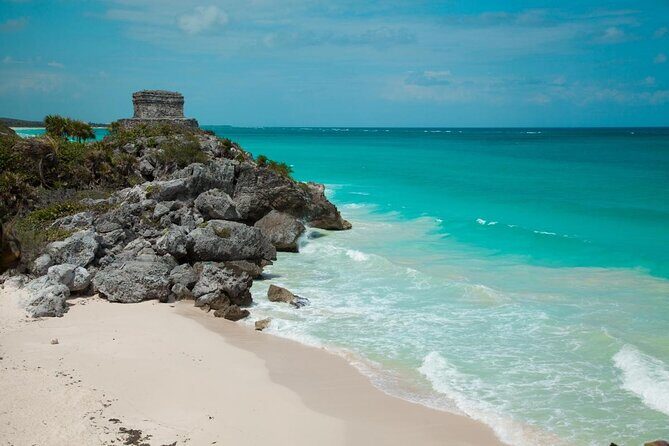
- Open-water sessions in varied environments: you may start with a cenote experience like Casa Cenote in Tulum, then head to Cozumel for ocean training.
- Conservation taught as part of technique: you learn marine care while you learn how to move underwater safely.
- Strong instruction names to look out for: Jon (and Cata) and instructors like Mariana come up repeatedly for patience and fundamentals.
- Video option after your sessions: you can purchase underwater videos rather than bringing a GoPro.
PADI Open Water in Cozumel: what the 2- or 3-day schedule really means
This is the kind of Open Water course that tries to respect your time. The course can be completed in 2 days or 3 days, depending on what you can fit in. On the quick end, you’ll likely compress your theory, pool work, and open-water sessions into a tight rhythm so you get certification sooner rather than later.
You’ll follow the standard Open Water structure in three phases:
- Knowledge Development (the theory)
- Confined Water Dives (skill practice in controlled conditions)
- Open Water Dives (using your skills in real conditions)
That structure matters because it keeps you from feeling like you’re learning everything for the first time while you’re also trying to breathe, control buoyancy, and pay attention to surroundings. If you’re new, that sequencing is what makes the whole thing click.
The other scheduling reality: the course depends on conditions. The info you’re given says it requires good weather, so if conditions are rough, you’ll be offered a different date or a full refund. Translation: don’t plan your flight the same day as your last planned session unless you have buffer time.
Other Cozumel tours we've reviewed in Cozumel
Theory first: online or classroom knowledge development
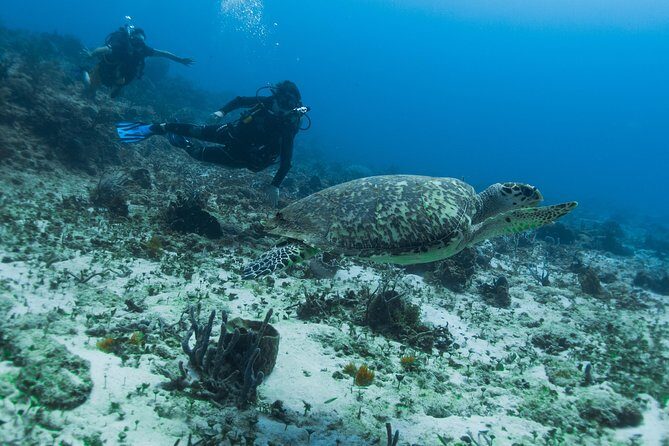
Before you touch a regulator underwater, you’ll cover the basics of scuba with Knowledge Development. The course allows two paths: you can study theory independently online or attend a classroom option.
For me, that flexibility is a real value point. If you’re the type who likes quiet progress before a trip, online theory keeps momentum. If you learn better with a guide in the room, the classroom option can help you ask questions and get clarity before you ever go in the water.
The course also emphasizes understanding key scuba information and not just memorizing it. Your instructor checks your progress, and they answer questions along the way. That matters because Open Water isn’t just about equipment; it’s about knowing what’s going on and what to do when something feels unfamiliar.
Pool skills near Playa: the part that makes you feel safe later
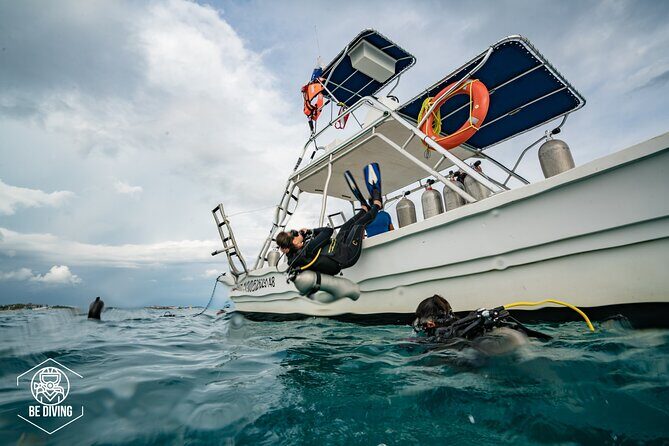
Even if you’ve snorkeled before, scuba adds weight, pressure, and new muscle memory. That’s why the confined water phase is the make-or-break stage.
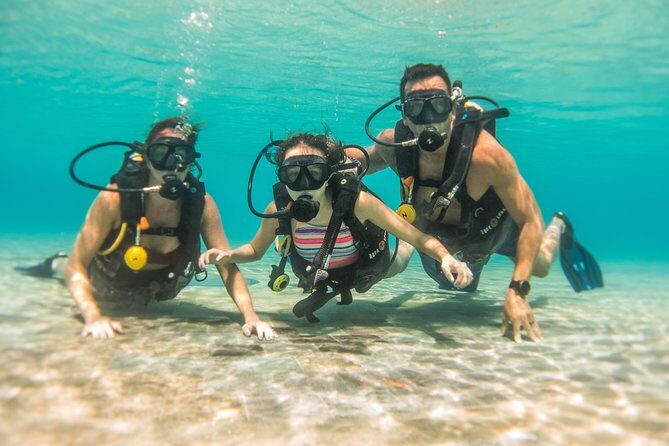
From the details you’re given, you’ll practice core scuba skills and get comfortable with the basic gear, including:
- mask
- snorkel
- fins
- regulator
- buoyancy control device (BCD)
- tank
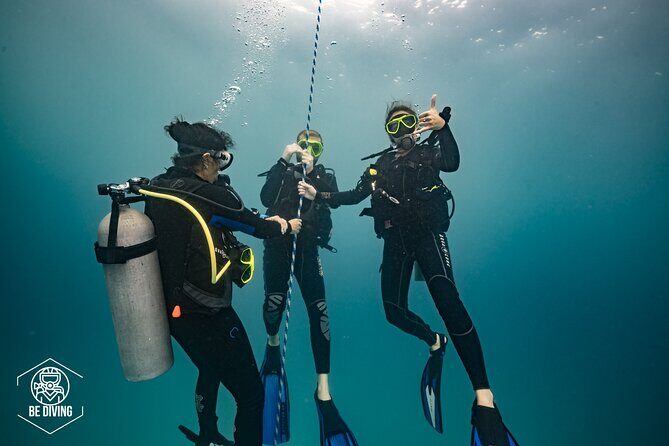
You’ll work with your instructor until the important parts feel automatic. In the reviews, people call out how instructors take the time to build buoyancy skills and how a pool on-site can make training more efficient for beginners. If you’ve ever watched someone flail underwater, you know why this matters. Good buoyancy early means less panic later and better control around the reef.
This course also leans into technique that supports safe, responsible movement. One instructor is described as teaching skills like trim and kicking methods from the beginning, with patience and enough time for practice. That kind of attention pays off because it shapes how you float and move when you’re out on open water—exactly when beginners often struggle.
From cenotes to the Mesoamerican reef: your open-water sessions
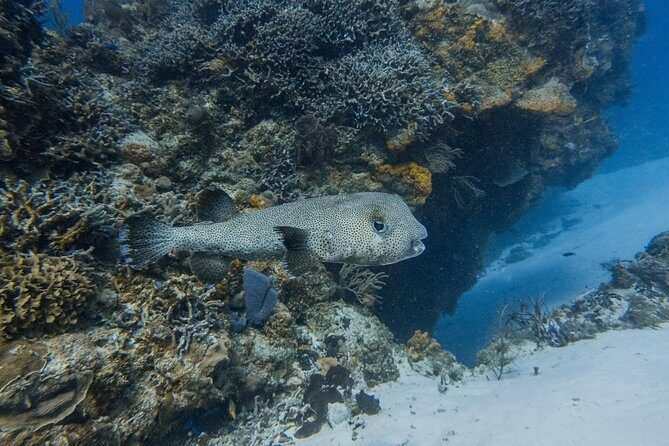
Once the pool skills are in place, you move into open-water training off the Mayan Riviera. Based on the program examples shared, your open-water sequence may include a cenote setup like Casa Cenote in Tulum, then later a ferry over to Cozumel for ocean sessions along the Mesoamerican reef.
Here’s why that mix can be a smart way to learn:
- A cenote environment can help you focus on skills without the full open-ocean variables all at once.
- Cozumel ocean training exposes you to real conditions and lets you practice your control with the kind of visibility and marine life that makes people fall in love with scuba.
Your instructor guides you in the water and keeps you focused on the goals of each session, so you’re not just wandering around. In the examples you provided, instructors set expectations before each day and underwater segment so you know what to work on and what success looks like.
If you’re thinking about the learning curve, this is a good sign: the structure aims to take you from basic control to competent underwater awareness. And yes, you’ll likely get photos or videos from the experience—one review calls out that they record you and you can buy the videos afterward. That’s handy if you don’t want to bring extra tech on day one.
Marine conservation lessons that actually affect how you move
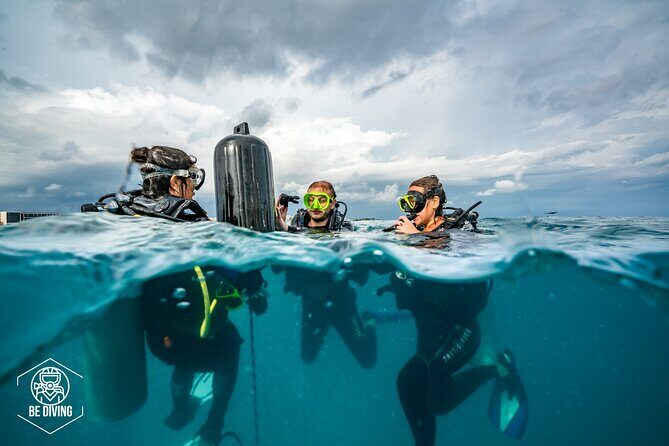
It’s easy for a course to say it supports conservation. What matters is whether it changes your behavior underwater.
This program explicitly includes marine conservation as part of completing your Open Water course. In practice, conservation shows up through technique: learning how to control buoyancy, move with less kicking, and avoid contacting marine life. When you’re taught to care about the environment alongside the skills, you’re more likely to carry that mindset into every future underwater trip.
A helpful clue from the teaching style described in the examples: instructors emphasize responsible habits and criticize the common beginner mistakes that can damage coral—things like kicking up sand or creating contact through poor movement. When training corrects those behaviors early, it’s not just about being careful in the moment. It becomes a habit.
So if your goal is not only to get certified but to be a diver you’re proud of, the conservation piece is a real benefit. You’re learning the “how” and the “why,” and those two stick together.
Gear, instructors, and safety: small-group attention that builds confidence
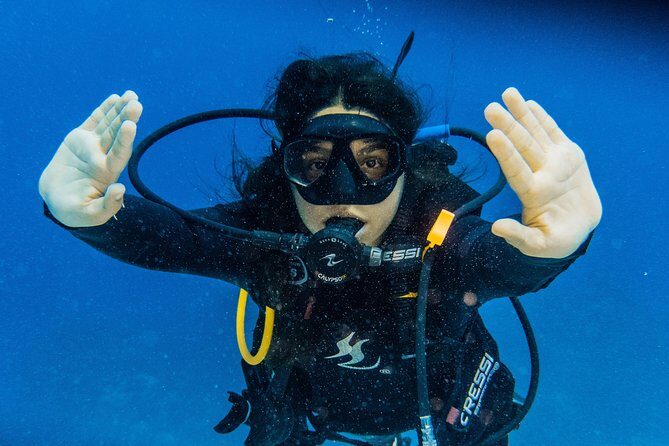
This course is listed as a private tour/activity, meaning you won’t be squeezed into a large mixed group. That’s a big deal for beginners because you want time to practice and time to get corrected before you develop bad habits.
The gear is provided (at least the standard kit listed above), and your instructor checks your progress. They also answer questions as you go, which helps you stay calm when something feels confusing.
Names that show up in the examples include:
- Jon (frequently described as very patient and focused on fundamentals)
- Cata (mentioned alongside Jon in one example)
- Mariana (praised as patient and making first-time scuba feel comfortable)
In one example from a technically minded diver, Jon is described as teaching trim, buoyancy, and kicking technique right from the start to avoid the classic problems you often see with poorly trained divers. That’s exactly the kind of instruction that can make your certification feel like the start of real competence, not just a stamp.
Also pay attention to pacing. In the examples, people highlight not being rushed and being supported at their own speed. That’s how you turn first-time jitters into confidence. If you’ve got a short attention span or high anxiety, a patient instructor and a skill-first plan can be the difference between tolerating the course and feeling good about it.
Value check: is $600 a good deal for Open Water?
Let’s talk money honestly. The price is listed as $600 per person. For many people, that number raises the question: what’s included that makes this worth it?
What you get from the info provided:
- a full PADI Open Water course structure (theory + confined skills + open-water sessions)
- instruction in English
- gear training with standard scuba equipment
- a private group setup
- a focus on marine conservation, not just mechanics
- equipment-based skill building that aims for self-sufficiency underwater
From the examples you shared, there’s also mention of the crew handling logistics like travel and lunch on at least some schedules. And there’s a video option after the course, which can save you from buying or bringing your own action camera for your first certificate.
One way to judge value: compare not just the price tag, but the training quality signals. Here, you have repeated mentions of patience, careful skill teaching, and responsible practices. If you’re paying to learn scuba, those parts are the real cost driver, because better instruction usually means better learning, fewer mistakes, and more enjoyment later.
The course also has flexibility (2 or 3 days). If your schedule allows a faster completion, you effectively get the same outcome with less time away from your itinerary—often the biggest hidden cost in travel.
Where you start in San Miguel de Cozumel, and how to plan around the addresses
The start location is listed as San Miguel de Cozumel, Quintana Roo, Mexico, and the activity ends back at the meeting point. That keeps things tidy.
You’re also given a ticket redemption point in Playa del Carmen at 10 Avenida Nte. 173-5, Gonzalo Guerrero, 77710 Playa del Carmen, Q.R., Mexico, and it notes the area is near public transportation. That means your best plan is to line up your arrival day so you can handle redemption smoothly, then travel onward as needed for the course days.
A practical tip: keep some buffer time on your first day. When a course references both a Playa del Carmen address and a San Miguel de Cozumel starting point, you’re likely coordinating transport between bases. You’ll be glad you’re not racing the clock.
If you’re coming from downtown Playa, this setup can be convenient. If you’re staying far out, plan transport early and don’t assume you can wing it at the last minute.
Who this Open Water course suits best
This course is a strong match if:
- you’re starting scuba and want a step-by-step path
- you value patient coaching and clear goals for each session
- you want technique focused on buoyancy and control, not just passing tasks
- you care about marine conservation and responsible behavior underwater
It’s also suited to people who like structure. The clear phase breakdown (theory, confined practice, open water) helps you track progress.
A caution if you’re on the low side of fitness or you hate waiting: the program notes a moderate physical fitness level, and the schedule depends on weather. If you’re dealing with mobility limits, or you can’t handle uncertainty in your trip timing, you’ll want to think carefully before booking.
Should you book this Open Water course in Cozumel?
I think you should book if you want Open Water training with a calm, fundamentals-first approach and a conservation mindset—plus the chance to learn in both cenote-style and ocean environments depending on the schedule.
It’s also a good choice if you want private attention and you don’t want to feel rushed. People specifically praise instructors like Jon and Mariana for patience, careful instruction, and building skills that carry forward. And for many first-timers, the pool-to-open-water progression is exactly what you need to feel steady.
You might skip or look for a different option if you’re trying to squeeze scuba into a trip with zero weather buffer, or if your schedule can’t handle the 2 vs 3-day variation. With scuba, you pay for safety and instruction, but you also accept that conditions matter.
FAQ
How long is the Open Water course in Cozumel?
It’s listed as about 3 days on average, and it can be completed in 2 or 3 days depending on your availability and scheduling.
What is included in the PADI Open Water course?
The course includes Knowledge Development (theory), confined water training (basic scuba skills), and open-water sessions to use your skills.
Can I do the theory part online?
Yes. Knowledge Development can be done online independently or in a classroom.
What equipment will I learn with?
You’ll be trained using standard Open Water gear such as a mask, snorkel, fins, regulator, buoyancy control device (BCD), and a tank.
Where does the course start and end?
The start location is San Miguel de Cozumel, Mexico, and the activity ends back at the meeting point.
Where do I redeem my ticket?
The ticket redemption point listed is 10 Avenida Nte. 173-5, Gonzalo Guerrero, 77710 Playa del Carmen, Q.R., Mexico.
Is this a private course?
Yes. It’s listed as a private tour/activity, so only your group participates.
What language is the course offered in?
It’s offered in English.
Is there a fitness requirement?
Travelers should have a moderate physical fitness level.
What if weather conditions are poor?
The experience requires good weather. If it’s canceled due to poor weather, you’ll be offered a different date or a full refund.
What is the cancellation policy?
Free cancellation is offered. You can cancel up to 24 hours in advance for a full refund, and cancellations less than 24 hours before the start time are not refunded.