REVIEW · COZUMEL
Try diving without previous experience from shore
Book on Viator →Operated by Buceo en Cozumel | Medusas Dive Cozumel | Bucea por primera vez en la Riviera Maya · Bookable on Viator
Walking into the water is the easy part. After that, you’re guided step by step through a beginner-friendly scuba session built around shore entry and a capped 12-meter max depth. I like that it’s structured: a short theory moment, a few simple skills, then time to enjoy what’s underwater without feeling tossed in at the deep end.
Two things I’d call out right away: the instruction is patient and safety-focused, and the plan takes you to the Jacques Cousteau underwater museum plus a coral reconstruction area with plenty of marine life. One consideration: you do need good weather for this to run, so if the sea is rough, you may have a schedule change or refund.
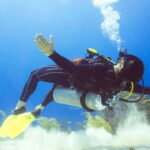
If you’re picturing snorkeling plus cameras, this is different. You’ll be breathing underwater with proper gear, learning how to control your breathing, buoyancy basics, and move calmly—so the underwater world feels like a real place, not just a stunt.
In This Review
- Key Highlights to Know Before You Go
- First-Time Setup: What the 3 Hours Looks Like
- Cousteau’s Underwater Museum and the Coral Reconstruction Area
- How the Basic Diver Program Teaches Skills Without Pressure
- Entering From Shore: Why It’s Often Easier for Beginners
- What You’ll See Underwater (So You Can Look With Purpose)
- Photos, Videos, and the “You’ll Be Glad You Did This” Factor
- Price and Value: Is $136.77 Worth It?
- Timing, Location, and What to Expect on Arrival
- Who This Is Best For (and Who Should Think Twice)
- Should You Book This Cozumel Shore-Entry Scuba Session?
- FAQ
- How deep will I go on this scuba experience?
- What’s the total duration?
- Do I need scuba experience beforehand?
- What marine life can I expect to see?
- Is it private or shared with other people?
- What happens if weather is bad?
Key Highlights to Know Before You Go
- Shore-based start makes it more beginner-friendly than big boat entries.
- Short classroom + 3 in-water skills keeps the learning curve manageable.
- 12 meters max fits an intro program and helps you relax into the experience.
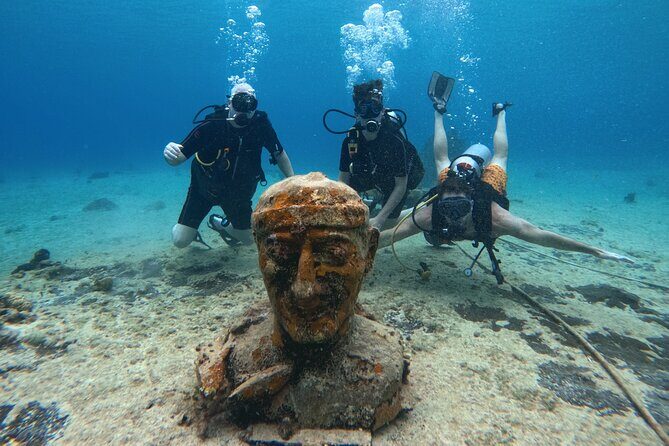
- Underwater museum to honor Jacques Cousteau adds a story layer to what you see.
- Coral reconstruction project means you’re looking at living reef work, not just rocks.
- Professional coaching from named instructors like Aída and Eider Pinillos stands out in real feedback.
First-Time Setup: What the 3 Hours Looks Like
This is a 3-hour, shore-based scuba experience in Cozumel that’s designed for people who want to try the real underwater world without needing previous experience. The day usually starts at their location on Avenida 20 between Benito Juarez and 2 Nte, Centro, 77600 Cozumel. Expect a calm meet-up, gear handling, and getting matched with your instructor.
The overall flow matters because it avoids the most common beginner problem: confusion. First, you’ll get a classroom-style orientation so you understand the basic rules before anything touches the ocean. Then you practice a few core skills in the water. After that, you get the fun part—time underwater to enjoy marine life and the sites they’ve planned for your level.
The schedule runs multiple times per day. Their listed hours are 9:00 AM–12:00 PM and 12:30 PM–3:30 PM, Monday through Sunday. Plan to arrive a little early so you don’t feel rushed during setup.
And yes, it’s private for your group. That’s a big deal if you’re nervous or you learn better when you’re not surrounded by people moving at different paces.
Other scuba diving tours in Cozumel
Cousteau’s Underwater Museum and the Coral Reconstruction Area
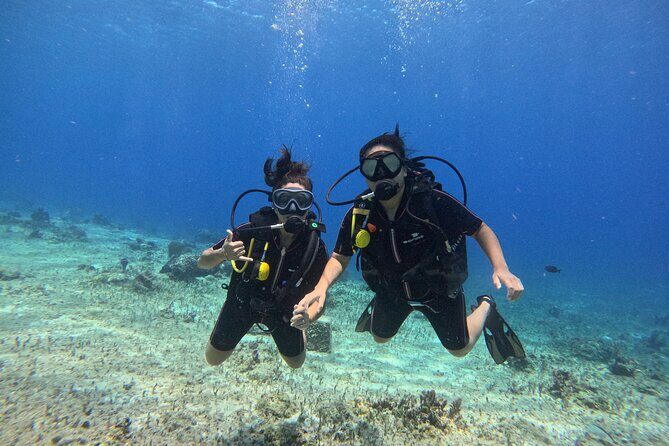
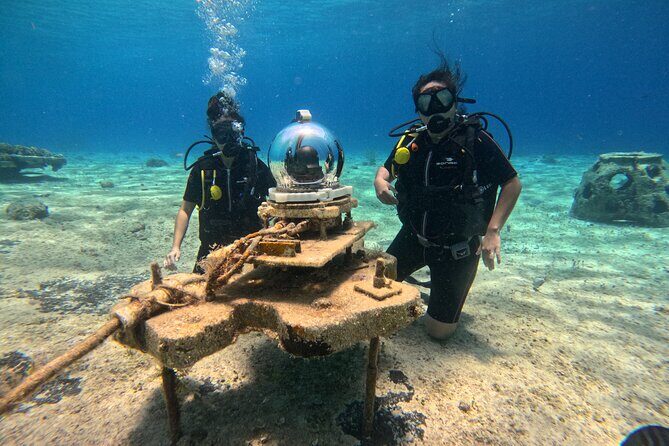
One reason this outing feels special is the mix of wonder plus purpose. You’re heading to an underwater museum honoring Jacques Cousteau, a name that has real weight in scuba history. In plain terms: it’s not only about seeing fish. It’s about seeing the underwater world as something humans carefully built to be viewed and studied.
Then there’s the coral reconstruction project. That’s where the experience gets practical. Instead of just touring reef scenery, you’re watching the results of restoration work—areas where coral is growing back and marine life is using the structure to live and feed.
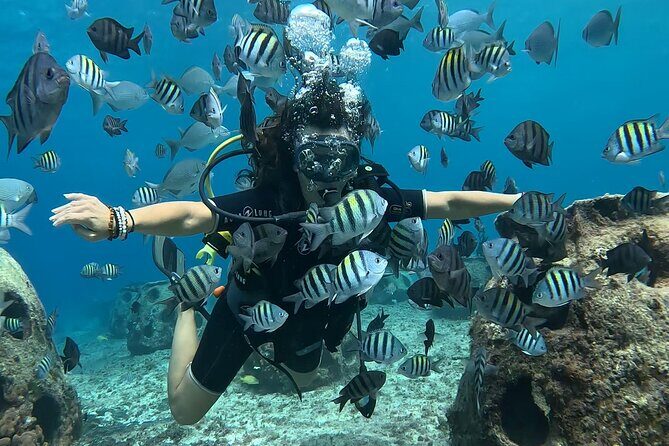
What you’ll likely spot varies by conditions, but the plan is built around marine life such as puffer fish, rays, parrot fish, and trumpet fish. In real first-timer experiences with this program, people also report seeing a strong range of animals—like baby sharks, turtles, and rays. Even if you don’t see every type listed on the day, the diversity is a core part of why Cozumel is famous.
How the Basic Diver Program Teaches Skills Without Pressure
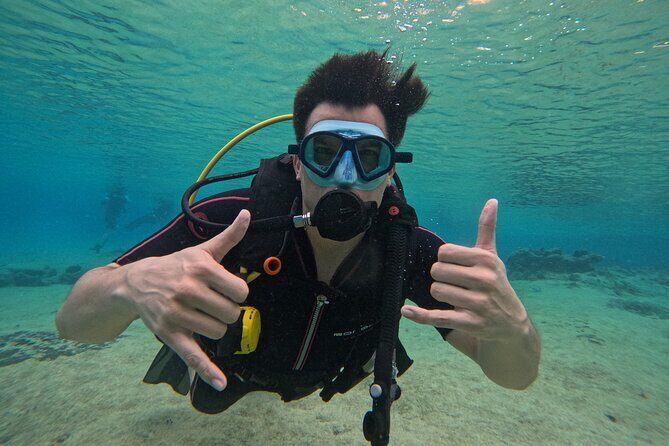
This isn’t a random “good luck” moment. The program is built around the Basic Diver approach, with a hard ceiling at 12 meters. That limit matters because it keeps the session within a comfortable training range for beginners while still giving you a proper scuba view.
Before you enter, you’ll get a theoretical class. Think of it like the quiet part of the morning: how scuba works, what to do if something feels off, and how to stay calm when the first breath underwater happens. This is also where instructors set expectations for buoyancy basics and movement.
After that, you do 3 simple skills in the water. The goal isn’t perfection. It’s control. If you can follow instructions, breathe steadily, and practice a few movements safely, you’re going to have a much better time during the actual site portion.
This is exactly the piece I’d prioritize if you’re worried you’ll feel overwhelmed. The teaching is part of the value. You’re not paying only for a location—you’re paying for the coaching that helps you enjoy it.
Entering From Shore: Why It’s Often Easier for Beginners
Shore entry changes the feel of the whole experience. Boat entries can add extra motion and uncertainty before you even start. Shore entry tends to reduce that initial stress because you’re closer to the start, and the process usually feels more controlled.
That said, the day still depends on the ocean and setup. The experience requires good weather, so if conditions are poor, the operator may switch dates or refund. This is normal for water activities, and it’s worth building flexibility into your Cozumel plan.
A shore-based plan also helps you with learning mechanics. When you’re practicing skills, you want fewer surprises. You want time to orient yourself, understand how the gear feels on your body, and then focus on relaxing underwater.
If you’re someone who gets nervous about the water, this approach can help. Real feedback specifically highlights that instructors give support to people who are afraid at the start, which is reassuring if you’re in that camp.
What You’ll See Underwater (So You Can Look With Purpose)
The biggest win on a first scuba session is not just the first breath. It’s learning what to watch so you can actually enjoy the time underwater instead of thinking about every sound.
Here’s how I suggest you frame it in your head:
- First, look for motion: rays and other animals often glide slowly, and if you track movement you’ll find them even when they’re partially hidden.
- Next, scan for color patterns: parrot fish and trumpet fish stand out when you look for shapes more than individual details.
- Then, watch for behavior: puffer fish and similar species often move differently than long swimmers. That behavior is what makes the experience feel alive, not staged.
Cozumel is known for clear visibility, and this program aims you at a mix of reef structure (including restoration zones) and the underwater museum elements. That’s why even an intro session can feel like more than an obligation—it can feel like a proper underwater outing.
One practical tip: when you feel buoyancy steadiness getting easier, that’s when the scenery really lands. Early on you may focus on breathing and positioning. Later, you start to notice the environment—the museum structure, reef growth, and the animals using it.



Photos, Videos, and the “You’ll Be Glad You Did This” Factor
A small detail with big emotional payoff: the center provides photos and videos. For a first scuba session, that matters because you won’t remember every angle or moment while you’re learning skills and concentrating on safety.
It’s the kind of service that helps you share the experience later without relying on shaky attempts with a phone. And if you’re thinking about doing more scuba in the future, having real footage makes it easier to track what you improved and what you want to work on next.
Price and Value: Is $136.77 Worth It?
The price is $136.77 per person for about 3 hours. On its face, that’s not the cheapest activity in Cozumel. But scuba instruction isn’t just a ticket to a place—it’s equipment, training, and trained supervision in the water.
What makes it good value here:
- You’re not doing it solo. You’re in a guided program with a classroom component and multiple coached steps.
- The program has a defined 12-meter max depth, which fits an intro level and reduces risk complexity.
- It’s private for your group, which often means more attention and less waiting around while you learn.
- You also get photos and videos, which adds to the overall value.
If you’re comparing this to a “try it” style experience that skips instruction, this one generally feels more worth it because it teaches the basics rather than only staging the excitement.
The booking pace is another clue. It’s commonly booked about 10 days in advance on average. If you want a specific time slot (especially around holidays), don’t wait until the last minute.
Timing, Location, and What to Expect on Arrival
You’ll meet at their Cozumel shop area on Avenida 20. Their operating windows are listed as 9:00 AM–12:00 PM and 12:30 PM–3:30 PM. In practice, water activities can run a bit tight around setup time, so I’d aim to arrive early enough to get gear fitted without stress.
Confirmation is received at booking time, and the tour uses a mobile ticket. For most people, that just means fewer printed papers and less hassle.
Minimum age is 10 years, and most travelers can participate, which makes it a realistic choice for a range of groups. Still, if someone in your group has strong motion sickness, anxiety in water, or any medical concerns, it’s smart to discuss it with the operator beforehand since the session is weather-dependent and includes underwater skills.
Who This Is Best For (and Who Should Think Twice)
This tour is a great fit if:
- It’s your first time trying scuba and you want structure.
- You want an instructor who explains things clearly and helps you feel safe.
- You care about seeing more than a tiny sample of reef life.
Real feedback also praises instructors by name—Aída and Eider Pinillos—for being professional, patient, and supportive, especially when people start out nervous.
You might want to think twice if:
- You’re very sensitive to water conditions and know you’ll struggle if the sea isn’t calm.
- You expect to go far beyond an intro level. This program is capped at 12 meters, so it’s designed for comfort and learning, not for advanced depth goals.
Should You Book This Cozumel Shore-Entry Scuba Session?
If you want a beginner scuba experience that focuses on safety, instruction, and a meaningful underwater setting, I think this is a solid choice. The combination of shore entry, a short theory intro, 3 coached in-water skills, and then a real look at the Cousteau underwater museum and coral restoration makes it more than a quick thrill.
Book it if you’ll appreciate learning as part of the fun. Skip it (or ask questions first) if you only want passive sightseeing and would hate practicing basics.
Bottom line: at $136.77 for about 3 hours, you’re paying for guided training plus an iconic Cozumel underwater experience. For first-timers who want to feel confident instead of rushed, that’s a good deal.
FAQ
How deep will I go on this scuba experience?
The program is designed for a maximum depth of 12 meters.
What’s the total duration?
It lasts about 3 hours (approx.).
Do I need scuba experience beforehand?
No previous experience is required for this experience. It includes a theoretical class, then 3 simple skills in the water before you enjoy the dive.
What marine life can I expect to see?
The experience is described as offering a chance to see marine life such as puffer fish, rays, parrot fish, and trumpet fish. In practice, you may also see other animals depending on conditions.
Is it private or shared with other people?
It’s private. Only your group will participate.
What happens if weather is bad?
The experience requires good weather. If it’s canceled due to poor weather, you’ll be offered a different date or a full refund.