REVIEW · PLAYA DEL CARMEN
Underwater Photo Shoot Experience in Cenote
Book on Viator →Operated by DriftCurrent photography & adventures · Bookable on Viator
Holding your breath can feel empowering. This is an underwater photo shoot in Playa del Carmen’s cenotes, guided step-by-step so you can focus on calm, poses, and light. You’ll move through different scenes, with a mix of relaxation, breathwork, and practical modeling tips.
Two things I really like are the patient instruction (with Esther and Eleonora showing you what to do at your pace) and the way most photos are taken near the surface, so you do not need major swimming skill or long breath-holds. One consideration: you’ll want to plan ahead because clothes and make-up are not included, and transportation to the cenotes is on you.
In This Review
- Key highlights you’ll feel right away
- How this underwater cenote shoot actually works
- Starting at Cenote Cristalino: your prep zone with real guidance
- Cenote Cristal & Escondido: switching scenes without switching comfort
- Breathwork and breath holding: why the coaching feels like the real secret
- Posing underwater: what to do with hands, shoulders, and eyes
- Outfits, light fabrics, and matching your theme
- Photos, video clips, and post-editing value
- Who this experience suits best (and who should think twice)
- Small logistics that affect your day
- Should you book this underwater cenote photo shoot?
- FAQ
- How long is the underwater photo shoot?
- Where does the experience start and end?
- Is this a private activity?
- Do I need strong swimming skills or long breath holding?
- What’s included in the price?
- What’s not included?
- Is the tour offered in English?
- What if weather is poor?
Key highlights you’ll feel right away
- Patient coaching in the water so you can relax and pose without guessing
- Breath holding + breathing techniques taught before your photo time
- Near-surface photography for comfort, especially if you’re not a strong swimmer
- Two cenote stops (Cristalino, then Cristal & Escondido) for variety in backdrops
- Fashion-style outfit matching plus light fabric options to fit your look
- Post-edited photos + video clips included, so you get more than one kind of memory
How this underwater cenote shoot actually works
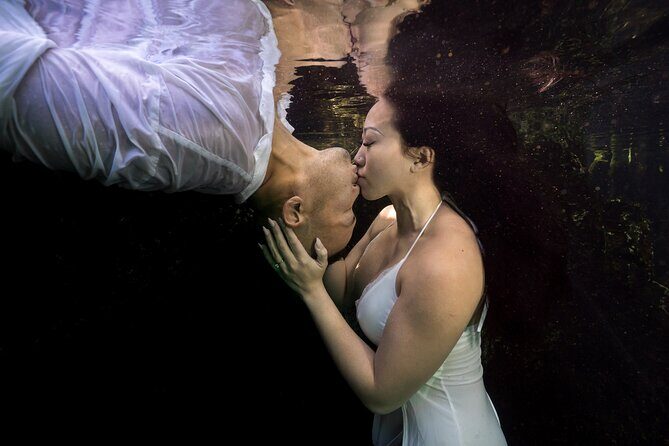
This experience is built for normal people, not professional models and not experienced swimmers. You start with prep and a briefing, then you practice basic breath holding and body control in a way that feels safe and learnable. The team treats it like a training session first, then a photo session.
And that approach matters. Underwater photos can look effortless, but they depend on calm posture, steady breathing, and knowing what your body should do with your hands, shoulders, and eyes. Here, you get those instructions in plain language, with help tailored to your comfort level.
You’ll also notice the tone is more mindful than athletic. There’s meditation and breathwork involved, plus time to relax before shooting. If you come in tense, you’ll leave with a different rhythm in your body.
Other cenote tours we've reviewed in Playa del Carmen

Starting at Cenote Cristalino: your prep zone with real guidance
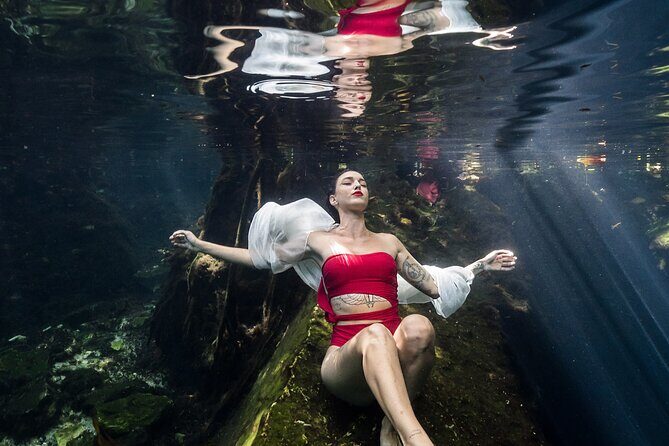
Your session begins at Cenote Cristalino (the meeting point is right there at 77734 San José, Q.R., Mexico). Expect the flow to be structured, not chaotic. First comes preparation and an initial briefing, then relaxation, then breath holding techniques.
What I like about that order is it reduces the biggest beginner fear: not knowing what happens next. You’re taught as you go, and the team is using scuba instructor skills, not just a camera approach. That means you get practical cues for how to manage your breathing and comfort underwater, and how to hold poses without panicking.
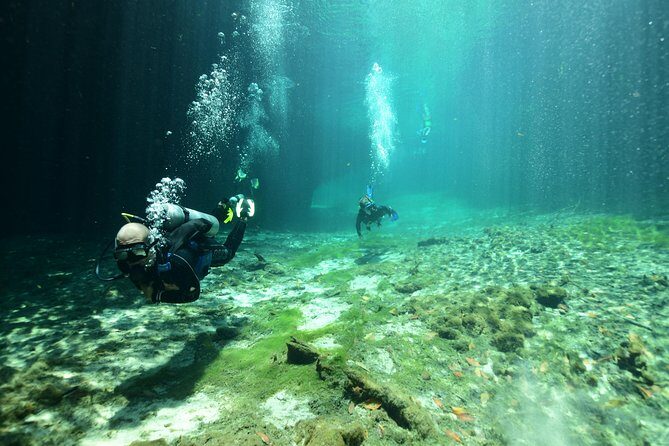
From there, you ease into the photo part. Many of the best shots are created next to the surface, so you can focus on expression and pose instead of fighting for air or swimming hard. The team also adapts photography to your wishes, so if you want calmer, fashion-style shots instead of dramatic ones, you can steer it.
A small practical note: since you’re working in water, your timing is the point. Listen for cues, keep to the group rhythm, and don’t rush your breathing. The better you follow the pacing, the easier everything becomes.
Cenote Cristal & Escondido: switching scenes without switching comfort
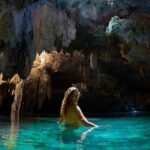
After the first stop, you head to Cenote Cristal & Escondido. The names alone hint at variety, but the real value is that you’re changing your background for photos while keeping the same coaching style.
Here’s how this usually helps your results: different cenotes bring different natural light and different textures to your frame. That gives you a wider range of looks across your final set, so you’re not stuck with one “same background” feeling for every image.
You’ll continue with in-water instructions for posing based on your underwater comfort and skills. If you’re newer, you’ll likely spend more time on simpler, stable poses near the surface. If you’re comfortable, you can often do more variety—within what you’re taught and what feels safe.
One gentle reminder: water conditions can change. Your guidance should adjust with it, but your job is the same either way: communicate your comfort level and follow the breathwork cues. The point is not to prove anything. The point is to get good photos without stress.
Breathwork and breath holding: why the coaching feels like the real secret
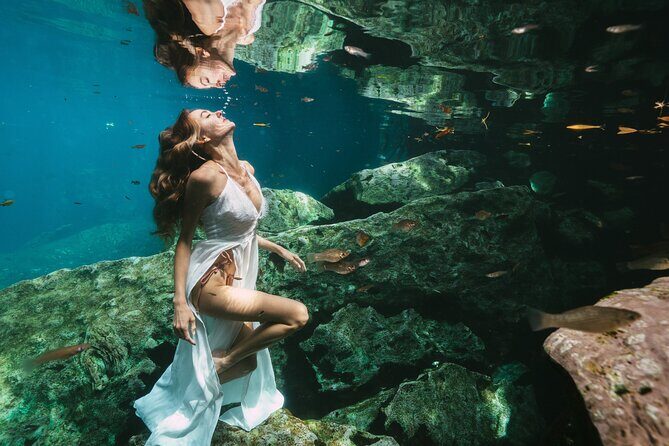
This is the part that makes the shoot work for most people. The team starts with relaxation and breath holding techniques, and they teach you an easy way to do it. You’re not expected to hold your breath for a long time.
Instead, you’re taught how to connect your breathing to your moment in the water. Think of it as timing: you learn how to prepare, breathe calmly, and then use a short, controlled breath hold for the photo.
This also affects your face and posture. When you’re anxious, your shoulders rise and your eyes get tense. When you’re guided into calm breathing, you look more natural on camera. That’s why this kind of coaching is more than safety. It’s an actual photography tool.
If you’re coming in expecting a tough workout, you’ll be surprised. It’s more like guided self-control: steady breath, gentle movements, and a soft focus on expression.
Posing underwater: what to do with hands, shoulders, and eyes
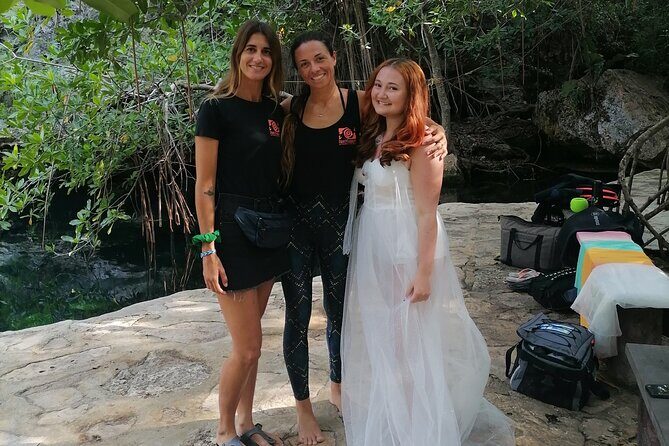
Posing is usually the hardest part for people new to underwater shoots. Here, you get direct help. The team teaches you how to pose underwater according to your underwater skills.
In plain terms, you’ll get cues about:
- keeping your body lines clean so you don’t look cramped
- using your arms and hands with intention instead of letting them drift
- keeping your face and gaze steady for sharp shots
If you’ve ever taken photos underwater by accident, you know how quickly things go sideways: hands float, hair behaves unpredictably, and your expression turns into a stress face. The coaching reduces that. It also helps you avoid overthinking, which is huge because overthinking kills natural expression.
The most praised part of the experience is how easy and fun it feels with that guidance, and I can see why. When someone is patient and clear, you stop fighting the water and start working with it.


Outfits, light fabrics, and matching your theme
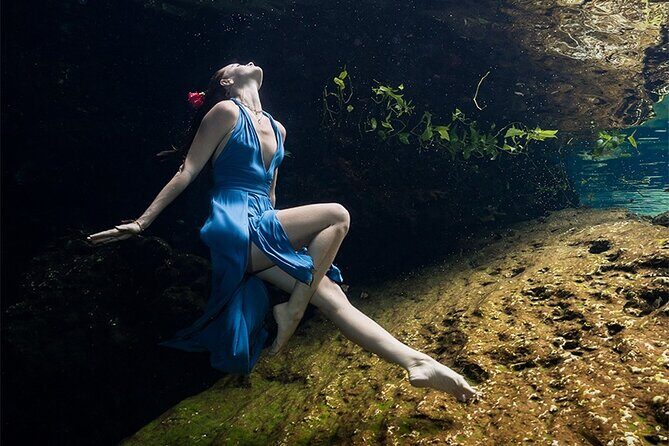
One of the smarter bits here is the styling support. The shoot is fashion-adjacent, and you’ll get outfit and theme consultation via email. That’s helpful because you can choose a look that fits the cenote vibe before you arrive.
Also, they provide incredible light colored fabrics to match your outfits. This matters because underwater photography loves contrast and flow. Lighter fabrics tend to move well and show up clearly in natural light, especially near the surface.
Clothes for the photoshoot and make-up are not included, though. So you still need to bring your own base outfit and any styling items you want. The tip is to think in terms of fit and comfort in water. You want something you can move in calmly for a couple of hours without worrying about constant adjustments.
Photos, video clips, and post-editing value
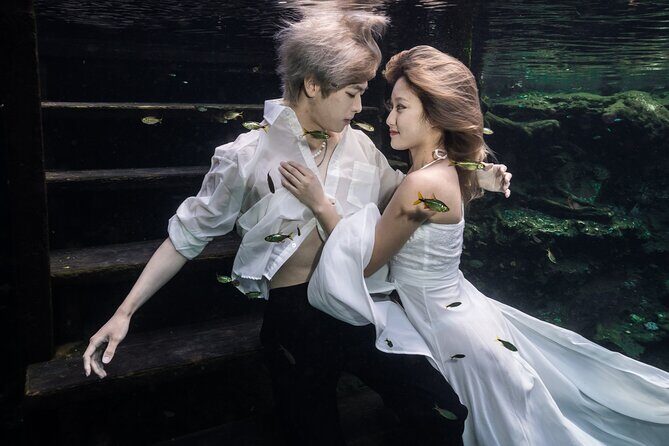
You get professional photos with post editing, plus video clips. That’s a big deal for value, because underwater shots can be hit or miss if the editing is minimal. Post-editing helps correct exposure, bring out skin tones, and smooth out the water look so your final images look intentional, not accidental.
The mix of still photos and video clips is also practical. Photos capture the pose you worked for. Video gives you motion and atmosphere, which matches the cenote setting in a way stills can’t.
And because the shooting is guided, your final set is usually more cohesive. You’re not just collecting random attempts. You’re creating a set with a clear style and consistent guidance.
Who this experience suits best (and who should think twice)
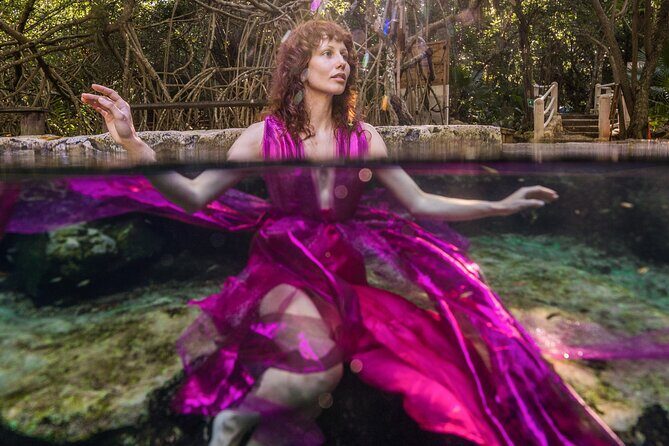
This works well for people who want something special to do in Playa del Carmen that’s not just another boat ride or a beach day. It also suits anyone who’s curious about underwater photography but worries about the physical part.
You’ll likely enjoy it if:
- you want a personal, private shoot experience
- you like calm, guided activities
- you’re okay doing simple tasks underwater with coaching
Most travelers can participate, and it’s private, so only your group joins. That usually makes the instruction feel less intimidating.
The main reason to think twice is if you hate water or you’re not comfortable being instructed underwater. Also, if you were hoping for a fully included styling package, remember clothes and make-up aren’t included, even if the team will help you choose and match your look.
Small logistics that affect your day
Time-wise, plan for about 2 hours 30 minutes total. That’s enough time for briefing, practice, multiple scenes, and the final shooting.
You’ll also start and end at Cenote Cristalino, so you’re not shuttled around for hours. Transportation is not included, which means you’ll want to arrange your own way to the meeting point.
The tour is offered in English, and you’ll receive a mobile ticket. If you book close to travel time, confirmation comes as soon as possible based on availability.
Should you book this underwater cenote photo shoot?
Yes, I think you should book it if you want a guided, photo-focused experience that stays beginner-friendly. The best part is the human element: patient instruction that makes posing feel doable, plus breathwork coaching that turns underwater nerves into something calmer.
Skip it or at least reconsider if you’re not willing to handle a few practical details on your side. You’ll need to bring your outfit and plan your make-up. You’ll also arrange your transport to the cenote.
If you want a memorable Cenote day with real results in your camera roll (and beyond), this is a strong choice.
FAQ
How long is the underwater photo shoot?
It lasts about 2 hours 30 minutes.
Where does the experience start and end?
You start at Cenote Cristalino (77734 San José, Q.R., Mexico) and it ends back at the same meeting point.
Is this a private activity?
Yes. Only your group participates.
Do I need strong swimming skills or long breath holding?
No. Most photos are taken next to the surface, and the instructors teach relaxation and breath-holding techniques in an easy way.
What’s included in the price?
Professional photos with post editing, video clips, meditation and breathwork techniques, modeling tips, outfit/theme consultation via email, and cenote entrance fees.
What’s not included?
Transportation to the cenote, and clothes for the photoshoot and make-up.
Is the tour offered in English?
Yes, it’s offered in English.
What if weather is poor?
The activity requires good weather. If it’s canceled due to poor weather, you’ll be offered a different date or a full refund. You can also cancel for a full refund up to 24 hours in advance.
If you tell me your comfort level in water (new, okay, confident) and what kind of photo vibe you want (calm portraits, fashion-style, artsy), I can suggest what to wear and how to prepare so you get the easiest, best results.